Unitree R1-A Review: Dual-Arm Bimanual Manipulation Platform From $4,290

Unitree R1-A Review: Dual-Arm Bimanual Manipulation Platform From $4,290

What is the Unitree R1-A?

The Unitree R1-A is a dual-arm bimanual manipulation platform — the R1 humanoid's torso, head, and arms sold without legs, on a fixed desktop mount or a wheeled chassis. Four models: the R1-A5 from $4,290 (2× 5-DOF arms), the R1-A7 at $4,890 (2× 7-DOF arms), and wheeled R1-A5-D / A7-D from $8,290. With ~2 kg per-arm payload, dual-hand teleoperation controllers included as standard, open secondary development, and eight gripper/hand options, it targets robot-learning labs collecting bimanual demonstration data — the same job ALOHA-class rigs do, at roughly one-sixth the price of a four-arm leader-follower kit. All models are built to order (60–90 days) and quote-based.

Verified July 2026 Pricing · Ships Worldwide

Unitree R1-A: Dual-Arm Robot for Data Collection — From $4,290

Research-grade bimanual arms on your desk. The R1-A takes the arms, torso, and head of Unitree's R1 humanoid, drops the legs, and undercuts established teleoperation rigs by thousands of dollars.

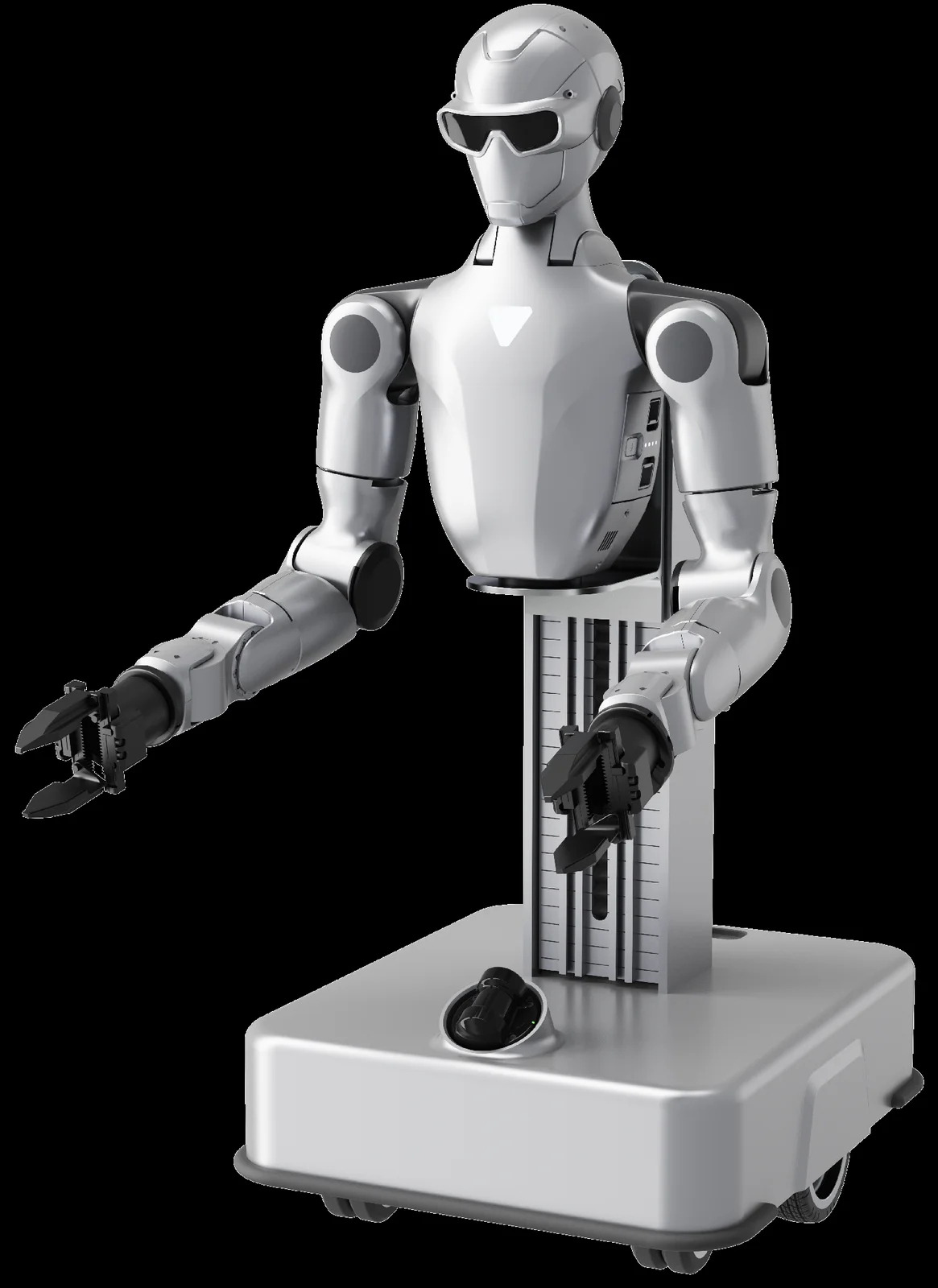
Unitree R1-A5 dual-arm robot torso on desktop mount — bimanual manipulation platform for robot learning data collection

What This Is — and Isn't

The R1-A is not a humanoid robot. It's manipulation hardware for the robot-learning era: a matched pair of arms with a shared torso, waist joint, and 2-DOF sensor head, engineered for one job — collecting and executing bimanual manipulation at a price a single grant line can cover.

If you've been pricing out an ALOHA-style rig, a pair of research cobot arms, or a bimanual teleoperation setup for imitation learning, this is that category. The difference is the form factor: instead of two independent arms bolted to a frame, you get an integrated upper body with humanoid kinematics — the same arm hardware that rides on Unitree's legged R1. Demonstration data you collect on the desktop maps directly to the walking version, which matters if your lab's roadmap ends in a mobile humanoid rather than a benchtop cell.

Every unit ships with dual-hand teleoperation controllers as standard — you're collecting bimanual demonstration data out of the box. Secondary development is fully supported with development manuals and robot interfaces, wrist cameras are optional, and hands are chosen separately from an eight-option catalog covering $380 parallel grippers through $8,680 tactile dexterous hands.

The Four R1-A Models

Verified MSRP, July 2026, without hands. Two fixed desktop-mount models, two wheeled. No US checkout listings exist for any A-series model — every order is quote-routed, typically 60–90 days from order confirmation to production completion.

ModelForm FactorArmsWeightSensingPrice (no hands)
R1-A5Fixed desktop mount2× 5-DOF · 420 mm reach~11 kgHead stereo camera$4,290Request Quote
R1-A7Fixed desktop mount2× 7-DOF · 555 mm reach~13 kgHead stereo camera$4,890Request Quote
R1-A5-DWheeled lift-column chassis2× 5-DOF · 420 mm reach~30 kgMID360 LiDAR + stereo camera$8,290Request Quote
R1-A7-DWheeled lift-column chassis2× 7-DOF · 555 mm reach~32 kgMID360 LiDAR + stereo camera$8,890Request Quote

Total DOF including waist and head: A5 = 13 · A7 = 17 · A5-D = 16 · A7-D = 20 (the -D chassis adds a lift pillar and 2-DOF wheeled base). Factory "Smart" bundles add a built-in 40 TOPS compute module plus your hand choice, starting at $6,690 (R1-A5 Smart A with Dex1-1 grippers); "Ultimate" 100 TOPS bundles are available on the wheeled chassis from $12,790, topping out at $24,490 fully loaded.

R1-A vs. Established Bimanual Data-Collection Rigs

Prices verified July 13, 2026 against current published listings. This is the honest picture — each platform wins somewhere.

PlatformConfigurationPricePer-Arm PayloadTeleop MethodAvailability
Unitree R1-A5Integrated dual 5-DOF torso$4,290~2 kgDual-hand controllers (included)Built to order, 60–90 days
Unitree R1-A7Integrated dual 7-DOF torso$4,890~2 kgDual-hand controllers (included)Built to order, 60–90 days
ALOHA Stationary V2 (Trossen)4-arm leader-follower kit$27,999.99~0.75 kg classPhysical leader armsShips from stock (US)
Aloha Solo (Trossen)Single leader-follower pair — not bimanual$8,999.95~0.75 kg classPhysical leader armShips from stock (US)
LeRobot SO-101 ×2 sets (DIY)Dual 6-DOF hobby-servo arms~$500–$1,100Grams-classLeader-followerDIY kits, self-assembled
AgileX Cobot MagicMobile-ALOHA class: 4 arms + AGV baseQuote (tens of thousands)~1.5 kgPhysical leader armsQuote-based

The trade-offs, plainly: ALOHA-style rigs give you kinesthetic teaching — you puppet follower arms through physical leader arms, which many imitation-learning pipelines were literally designed around — and Trossen ships from US stock with mature LeRobot integration. The R1-A gives you an integrated humanoid-format upper body at a fraction of the price, teleoperated with included handheld controllers, with roughly double the per-arm payload of ViperX-class followers and a direct data path to Unitree's legged humanoids. The SO-101 route is unbeatable for learning the tooling on a hobby budget, but hobby servos won't survive serious payload or duty cycles. If your bottleneck is budget per bimanual workstation — outfitting a course, scaling a data-collection floor — the R1-A5's math is hard to argue with: six desktop stations for the price of one four-arm kit.

Who Should Buy One

You are…Get thisWhy
A robot-learning lab collecting bimanual demonstration dataR1-A5, several of themCheapest credible 2 kg-class bimanual station; controllers included, so every unit collects data on day one
A manipulation researcher who needs reach and wrist dexterityR1-A7$600 buys two extra DOF per arm and 135 mm more reach — the 7-DOF kinematics handle constrained-workspace tasks the 5-DOF can't
Studying mobile manipulation without bipedal complexityR1-A5-D / A7-DWheeled chassis with lift column (0.68–1.32 m working height), MID360 LiDAR, and a 1.5-hour swappable battery
Teaching a manipulation courseR1-A5 fleetPer-seat cost near hobbyist territory with hardware that survives student duty cycles
Building toward a humanoid deploymentR1-A now, R1 laterSame arm hardware as the legged R1 — your demonstration data and manipulation stack carry over

Hands: Eight Options, $380 to $8,680

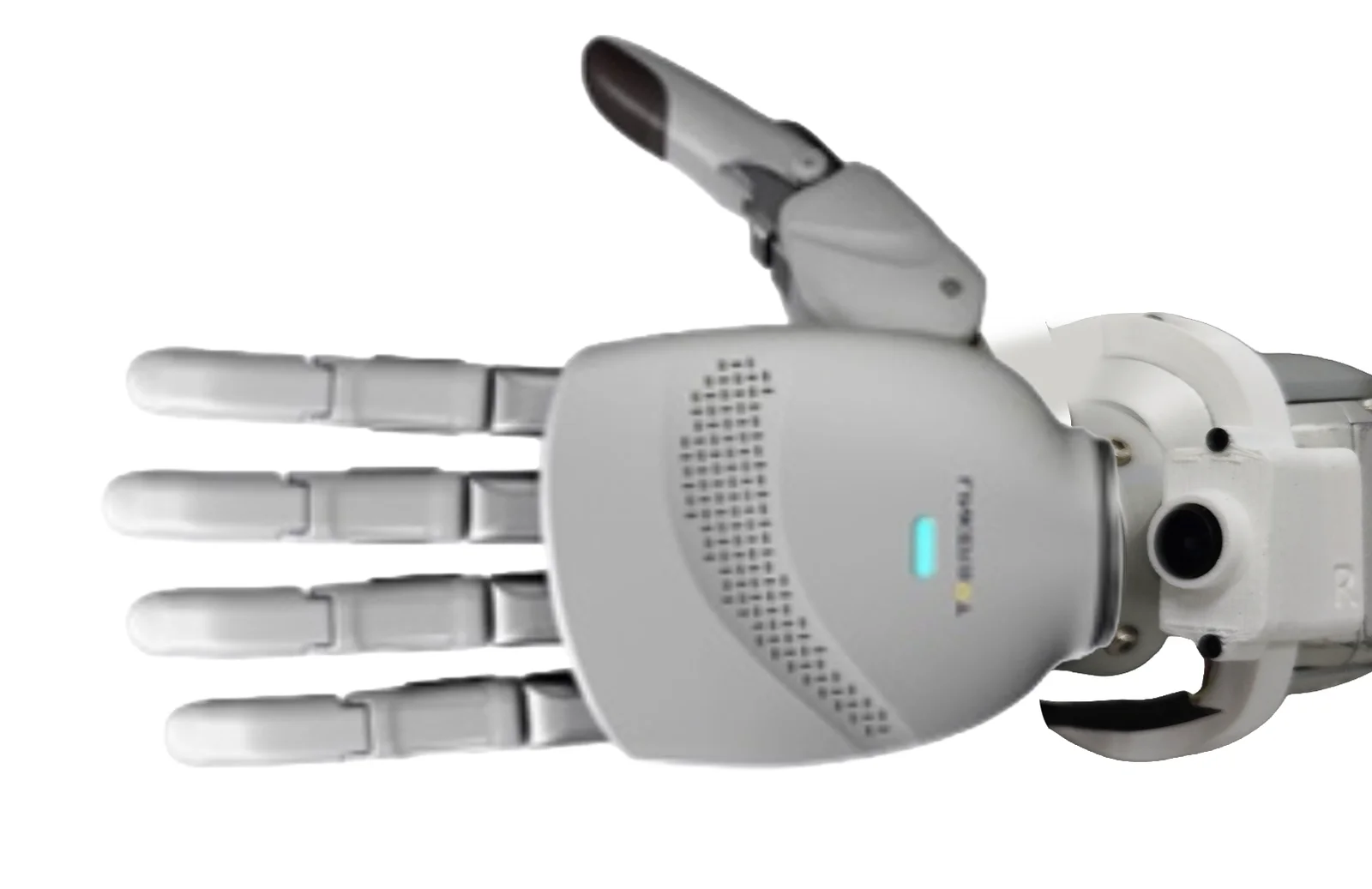
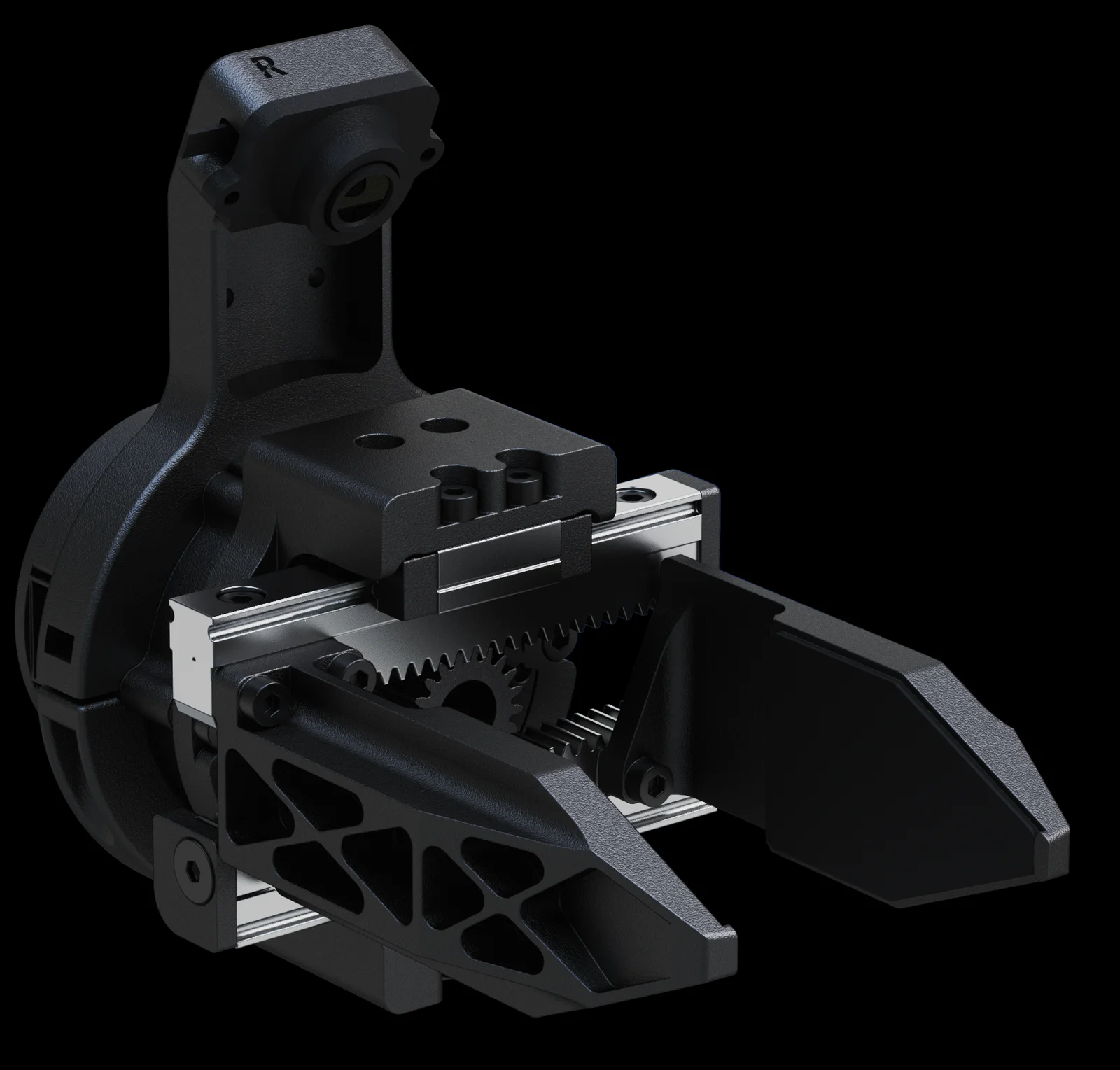
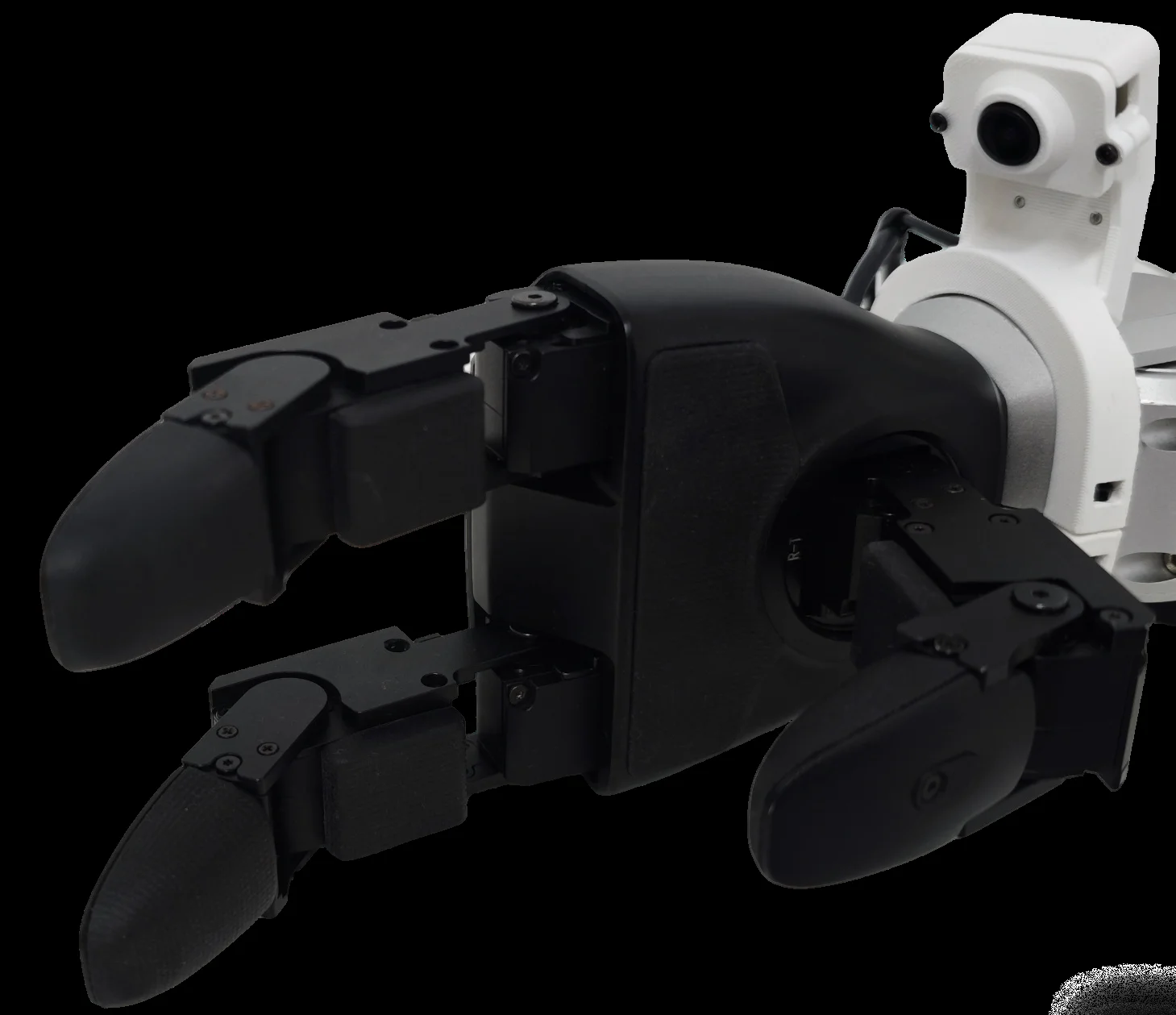
No R1-A includes hands — you choose per hand from the same catalog as the full R1. This is where the platform quietly becomes whatever you need it to be: a two-gripper pick-and-place station or a tactile five-finger dexterity rig.
Hand OptionTypePrice (per hand)Best For
Dex1-1 Standard / Advanced (+RGB cam)Parallel gripper, 485 interface$380 / $580Cheapest manipulation entry; pick-and-place teleop data at scale
Tendon-cable hand5-finger, cable-driven, 2 DOF / 10 joints$1,490Clean wiring-free design for demos and long duty cycles
LinkerBot O6 (± tactile)5-finger, 6 DOF / 11 joints, 70 N grip$1,590 / $1,790Budget five-finger work — tactile sensing for $200 more
BrainCo Revo 2 (± tactile)Bionic 5-finger, 50 N grip, 0.1° repeatability$6,680 / $8,680Proven bionic platform; tactile adds pressure, friction, direction, proximity sensing
Dex3-1 (± tactile)Force-controlled 3-finger, 7 DOF, 33 tactile sensors$7,680 / $8,680Force-control research; highest per-hand active DOF in the catalog

All hand prices are per single hand with required cabling and camera mounts included where noted; most buyers order two. Wrist cameras and compute expansion modules (40 TOPS / 100 TOPS) are optional across the line.

The Wheeled -D Chassis: Mobility Without Legs

The R1-A5-D and R1-A7-D mount the same dual-arm torso on a wheeled base with a motorized lift column. Collapsed, the unit stands 683 mm; elevated, the head reaches 1,323 mm — tabletop to countertop working heights without any of the control complexity (or fall risk) of a bipedal platform.

The chassis carries a removable lithium battery (~1.5 hours of runtime) and an external supply, plus a MID360 LiDAR alongside the head's stereo camera — the sensing package mobile-manipulation research actually needs. Compute expands with optional 40 or 100 TOPS modules, and the factory Ultimate bundles (100 TOPS built in) are exclusive to this chassis.

At $8,290 (A5-D) and $8,890 (A7-D), the wheeled models cost roughly what a single-arm leader-follower kit does — for a full bimanual mobile manipulator.

Unitree R1-A-D wheeled dual-arm robot on lift-column mobile chassis for mobile manipulation data collection
Unitree R1-A7 dual-arm robot with 7-DOF arms and parallel grippers for bimanual teleoperation research

A5 or A7? The $600 Question

The A5's 5-DOF arms handle the overwhelming majority of tabletop demonstration tasks — pick, place, stack, sort, hand-to-hand transfer. If you're buying stations for data collection volume, buy A5s and spend the difference on hands.

The A7's 7-DOF arms add redundant kinematics: the elbow can move while the end effector holds pose, which is what lets an arm work around obstacles, reach into containers, and maintain natural approach angles in cluttered scenes. Combined with 555 mm of reach (vs. 420 mm) and a longer 835 mm body, the A7 is the pick for manipulation research — anything where the arm's null space is part of the problem. For $600 more, most single-station labs should take it.

Full Specifications

SpecR1-A5R1-A7R1-A5-D / A7-D
Dimensions700 × 357 × 190 mm835 × 357 × 190 mm683 × 520 × 440 mm collapsed · 1,323 mm elevated
Weight~11 kg~13 kg~30 kg / ~32 kg
Total DOF13 (5×2 arms + waist + 2 head)17 (7×2 arms + waist + 2 head)16 / 20 (adds lift pillar + 2 base)
Per-arm payload~2 kg (varies with arm extension posture)
Arm length (forearm + upper arm)420 mm555 mmPer arm variant
Joint rangeWaist Y: ±150° · Head Y: ±115°, P: ±36°
Joint designLow-inertia inner-rotor PMSM motors · crossed-roller + double-row ball output bearings · dual + single encoders · hollow internal cabling · localized air cooling
Base compute8-core CPU (body) + 8-core CPU with 10 TOPS (head) · optional 40 TOPS module; 100 TOPS optional on -D and A7
SensingHead stereo cameraHead stereo cameraMID360 LiDAR + head stereo camera
Audio / connectivity4-array microphones + dual speakers · Wi-Fi 6 · Bluetooth 5.2 · rear-port power
PowerExternal supply standard; optional upper-body battery (fixed models, ~1.5 hr) · removable chassis battery on -D (~1.5 hr)
TeleoperationDual-hand controllers included as standard
DevelopmentSecondary development supported — dev manuals, robot interfaces, smart OTA updates
Warranty12 months, full unit

Wrist cameras, grippers, and dexterous hands are not included on any base model. Parameters vary by scenario and configuration; maintain safety distance during operation.

🎁 International Order Discount

Ordering from outside the US? We've negotiated a discount with our international fulfillment partner that applies to every R1-A model.

Reveal Discount Code →
BOTINFO2025

3% off orders over $3,000 through our international fulfillment partner — ships worldwide including Canada and Mexico. Every R1-A qualifies. Mention it in the quote form below.

Our Role

BotInfo.ai is an independent procurement gateway. We verify manufacturer and dealer pricing directly, keep it current (this page reflects the July 2026 price list), and route buyers to vetted fulfillment channels that handle purchase orders, institutional billing, and international shipping. We're compensated through fulfillment partnerships, never by marking up hardware — the prices above are the prices.

Verdict

The R1-A does one thing that matters enormously right now: it collapses the cost of a credible bimanual data-collection station to $4,290. For robot-learning groups, that changes the unit of planning from "the rig" to "the fleet." Buy the A5 for data-collection volume, the A7 for manipulation research where kinematic redundancy earns its keep, and a -D chassis when the task list includes moving between workstations. Budget hands separately — a pair of Dex1-1 grippers makes a complete $5,050 station; a pair of tactile Dex3-1s builds a $21,650 dexterity rig that still undercuts a four-arm leader-follower kit.

Two honest caveats. First, the 60–90 day production lead time is real — plan procurement around it, especially against grant deadlines. Second, if your work needs locomotion, the R1-A isn't a shortcut: the full bipedal Unitree R1 starts at $6,870 and is in stock, and the G1-D offers a heavier wheeled dual-arm platform in the G1 family. For everything on a tabletop, though, this is the price-performance line to beat in 2026.

Frequently Asked Questions

What is the Unitree R1-A?
A dual-arm bimanual manipulation platform: the torso, head, waist, and arms of Unitree's R1 humanoid without the legs, mounted on a fixed desktop plate (R1-A5, R1-A7) or a wheeled lift-column chassis (R1-A5-D, R1-A7-D). It's built for robot-learning research, teleoperation data collection, and tabletop manipulation — not for walking.
What's the difference between the R1-A5 and R1-A7?
Arm kinematics and reach. The A5 ($4,290) has two 5-DOF arms with 420 mm reach; the A7 ($4,890) has two 7-DOF arms with 555 mm reach. The A7's redundant kinematics let the elbow reposition while the end effector holds pose — valuable for cluttered scenes and constrained workspaces. For $600, most research buyers should take the A7; volume data-collection fleets should take A5s.
How does the R1-A compare to ALOHA-style rigs?
The R1-A5 at $4,290 is roughly one-sixth the price of a four-arm ALOHA Stationary V2 kit ($27,999.99) and carries more per-arm payload (~2 kg vs. the ~0.75 kg class). The trade-offs: ALOHA rigs use physical leader arms for kinesthetic teaching and ship from US stock with mature LeRobot integration, while the R1-A uses included dual-hand controllers and is built to order (60–90 days). The R1-A's humanoid form factor also means demonstration data maps to Unitree's legged robots.
Can the R1-A collect training data for imitation learning?
Yes — that's its core use case. Dual-hand teleoperation controllers are included as standard, wrist-mounted RGB cameras are available with most hand options, secondary development is fully supported with development manuals and robot interfaces, and optional 40/100 TOPS compute modules run inference on-platform. Labs use platforms in this class for ACT-style imitation learning and LeRobot-ecosystem pipelines.
What's the lead time on an R1-A?
Typically 60–90 days from order confirmation to production completion, plus shipping. No US checkout inventory exists for any A-series model — every order is built to order. If you're purchasing against a grant deadline, start the quote process early; we respond within 24 hours with current production timelines.
What hand and gripper options are available?
Eight options, priced per hand: Dex1-1 parallel gripper ($380 standard / $580 with RGB camera), tendon-cable five-finger hand ($1,490), LinkerBot O6 five-finger ($1,590 / $1,790 tactile), BrainCo Revo 2 bionic five-finger ($6,680 / $8,680 tactile), and Dex3-1 force-controlled three-finger ($7,680 / $8,680 tactile with 33 sensors). No base model includes hands; most buyers order two.
Should I buy the R1-A or the full Unitree R1?
If your work happens at a table or bench, the R1-A — you're not paying for legs, balance control, or fall protection you won't use. If your roadmap requires locomotion, the full bipedal R1 starts at $6,870 and is in stock. A common lab pattern: collect manipulation data on R1-A stations, deploy on the legged R1, since the arm hardware matches.
Can universities buy with a purchase order or grant funds?
Yes. Our fulfillment partners handle institutional purchase orders, quotes on letterhead for grant documentation, and net-terms billing for qualified institutions. Note the 60–90 day production window when planning against grant spending deadlines — we can provide formal quotes and pro-forma invoices quickly to lock in pricing.
Does the R1-A ship internationally?
Yes — worldwide through our international fulfillment partner, including Canada and Mexico. Orders over $3,000 (every R1-A qualifies) are eligible for the BOTINFO2025 discount code, worth 3% off. Mention it in the quote form and we'll apply it to your quote.
Does the R1-A support ROS and secondary development?
Yes. Every R1-A supports secondary development with development manuals and robot interfaces provided, plus smart OTA updates. Base compute is dual 8-core CPUs (10 TOPS in the head); serious on-board inference calls for the optional 40 TOPS module or, on the wheeled -D chassis, the 100 TOPS module available in factory Ultimate bundles.

Get a Verified R1-A Quote

Every A-series model is quote-based. Tell us your configuration — we respond within 24 hours with dealer-verified pricing, current production timelines, and PO documentation if you need it.

✓ 24-hour response · ✓ No obligation

Keep Comparing

Sources: Unitree Robotics official specifications and July 2026 price list, Trossen Robotics published pricing, verified fulfillment channels. Last updated July 13, 2026 · Status: Built to order, 60–90 days.

Unitree R1-A Review: Dual-Arm Bimanual Manipulation Platform From $4,290

Unitree R1-A Review: Dual-Arm Bimanual Manipulation Platform From $4,290

What is the Unitree R1-A?

The Unitree R1-A is a dual-arm bimanual manipulation platform — the R1 humanoid's torso, head, and arms sold without legs, on a fixed desktop mount or a wheeled chassis. Four models: the R1-A5 from $4,290 (2× 5-DOF arms), the R1-A7 at $4,890 (2× 7-DOF arms), and wheeled R1-A5-D / A7-D from $8,290. With ~2 kg per-arm payload, dual-hand teleoperation controllers included as standard, open secondary development, and eight gripper/hand options, it targets robot-learning labs collecting bimanual demonstration data — the same job ALOHA-class rigs do, at roughly one-sixth the price of a four-arm leader-follower kit. All models are built to order (60–90 days) and quote-based.

Verified July 2026 Pricing · Ships Worldwide

Unitree R1-A: Dual-Arm Robot for Data Collection — From $4,290

Research-grade bimanual arms on your desk. The R1-A takes the arms, torso, and head of Unitree's R1 humanoid, drops the legs, and undercuts established teleoperation rigs by thousands of dollars.

Unitree R1-A5 dual-arm robot torso on desktop mount — bimanual manipulation platform for robot learning data collection

What This Is — and Isn't

The R1-A is not a humanoid robot. It's manipulation hardware for the robot-learning era: a matched pair of arms with a shared torso, waist joint, and 2-DOF sensor head, engineered for one job — collecting and executing bimanual manipulation at a price a single grant line can cover.

If you've been pricing out an ALOHA-style rig, a pair of research cobot arms, or a bimanual teleoperation setup for imitation learning, this is that category. The difference is the form factor: instead of two independent arms bolted to a frame, you get an integrated upper body with humanoid kinematics — the same arm hardware that rides on Unitree's legged R1. Demonstration data you collect on the desktop maps directly to the walking version, which matters if your lab's roadmap ends in a mobile humanoid rather than a benchtop cell.

Every unit ships with dual-hand teleoperation controllers as standard — you're collecting bimanual demonstration data out of the box. Secondary development is fully supported with development manuals and robot interfaces, wrist cameras are optional, and hands are chosen separately from an eight-option catalog covering $380 parallel grippers through $8,680 tactile dexterous hands.

The Four R1-A Models

Verified MSRP, July 2026, without hands. Two fixed desktop-mount models, two wheeled. No US checkout listings exist for any A-series model — every order is quote-routed, typically 60–90 days from order confirmation to production completion.

ModelForm FactorArmsWeightSensingPrice (no hands)
R1-A5Fixed desktop mount2× 5-DOF · 420 mm reach~11 kgHead stereo camera$4,290Request Quote
R1-A7Fixed desktop mount2× 7-DOF · 555 mm reach~13 kgHead stereo camera$4,890Request Quote
R1-A5-DWheeled lift-column chassis2× 5-DOF · 420 mm reach~30 kgMID360 LiDAR + stereo camera$8,290Request Quote
R1-A7-DWheeled lift-column chassis2× 7-DOF · 555 mm reach~32 kgMID360 LiDAR + stereo camera$8,890Request Quote

Total DOF including waist and head: A5 = 13 · A7 = 17 · A5-D = 16 · A7-D = 20 (the -D chassis adds a lift pillar and 2-DOF wheeled base). Factory "Smart" bundles add a built-in 40 TOPS compute module plus your hand choice, starting at $6,690 (R1-A5 Smart A with Dex1-1 grippers); "Ultimate" 100 TOPS bundles are available on the wheeled chassis from $12,790, topping out at $24,490 fully loaded.

R1-A vs. Established Bimanual Data-Collection Rigs

Prices verified July 13, 2026 against current published listings. This is the honest picture — each platform wins somewhere.

PlatformConfigurationPricePer-Arm PayloadTeleop MethodAvailability
Unitree R1-A5Integrated dual 5-DOF torso$4,290~2 kgDual-hand controllers (included)Built to order, 60–90 days
Unitree R1-A7Integrated dual 7-DOF torso$4,890~2 kgDual-hand controllers (included)Built to order, 60–90 days
ALOHA Stationary V2 (Trossen)4-arm leader-follower kit$27,999.99~0.75 kg classPhysical leader armsShips from stock (US)
Aloha Solo (Trossen)Single leader-follower pair — not bimanual$8,999.95~0.75 kg classPhysical leader armShips from stock (US)
LeRobot SO-101 ×2 sets (DIY)Dual 6-DOF hobby-servo arms~$500–$1,100Grams-classLeader-followerDIY kits, self-assembled
AgileX Cobot MagicMobile-ALOHA class: 4 arms + AGV baseQuote (tens of thousands)~1.5 kgPhysical leader armsQuote-based

The trade-offs, plainly: ALOHA-style rigs give you kinesthetic teaching — you puppet follower arms through physical leader arms, which many imitation-learning pipelines were literally designed around — and Trossen ships from US stock with mature LeRobot integration. The R1-A gives you an integrated humanoid-format upper body at a fraction of the price, teleoperated with included handheld controllers, with roughly double the per-arm payload of ViperX-class followers and a direct data path to Unitree's legged humanoids. The SO-101 route is unbeatable for learning the tooling on a hobby budget, but hobby servos won't survive serious payload or duty cycles. If your bottleneck is budget per bimanual workstation — outfitting a course, scaling a data-collection floor — the R1-A5's math is hard to argue with: six desktop stations for the price of one four-arm kit.

Who Should Buy One

You are…Get thisWhy
A robot-learning lab collecting bimanual demonstration dataR1-A5, several of themCheapest credible 2 kg-class bimanual station; controllers included, so every unit collects data on day one
A manipulation researcher who needs reach and wrist dexterityR1-A7$600 buys two extra DOF per arm and 135 mm more reach — the 7-DOF kinematics handle constrained-workspace tasks the 5-DOF can't
Studying mobile manipulation without bipedal complexityR1-A5-D / A7-DWheeled chassis with lift column (0.68–1.32 m working height), MID360 LiDAR, and a 1.5-hour swappable battery
Teaching a manipulation courseR1-A5 fleetPer-seat cost near hobbyist territory with hardware that survives student duty cycles
Building toward a humanoid deploymentR1-A now, R1 laterSame arm hardware as the legged R1 — your demonstration data and manipulation stack carry over

Hands: Eight Options, $380 to $8,680

No R1-A includes hands — you choose per hand from the same catalog as the full R1. This is where the platform quietly becomes whatever you need it to be: a two-gripper pick-and-place station or a tactile five-finger dexterity rig.
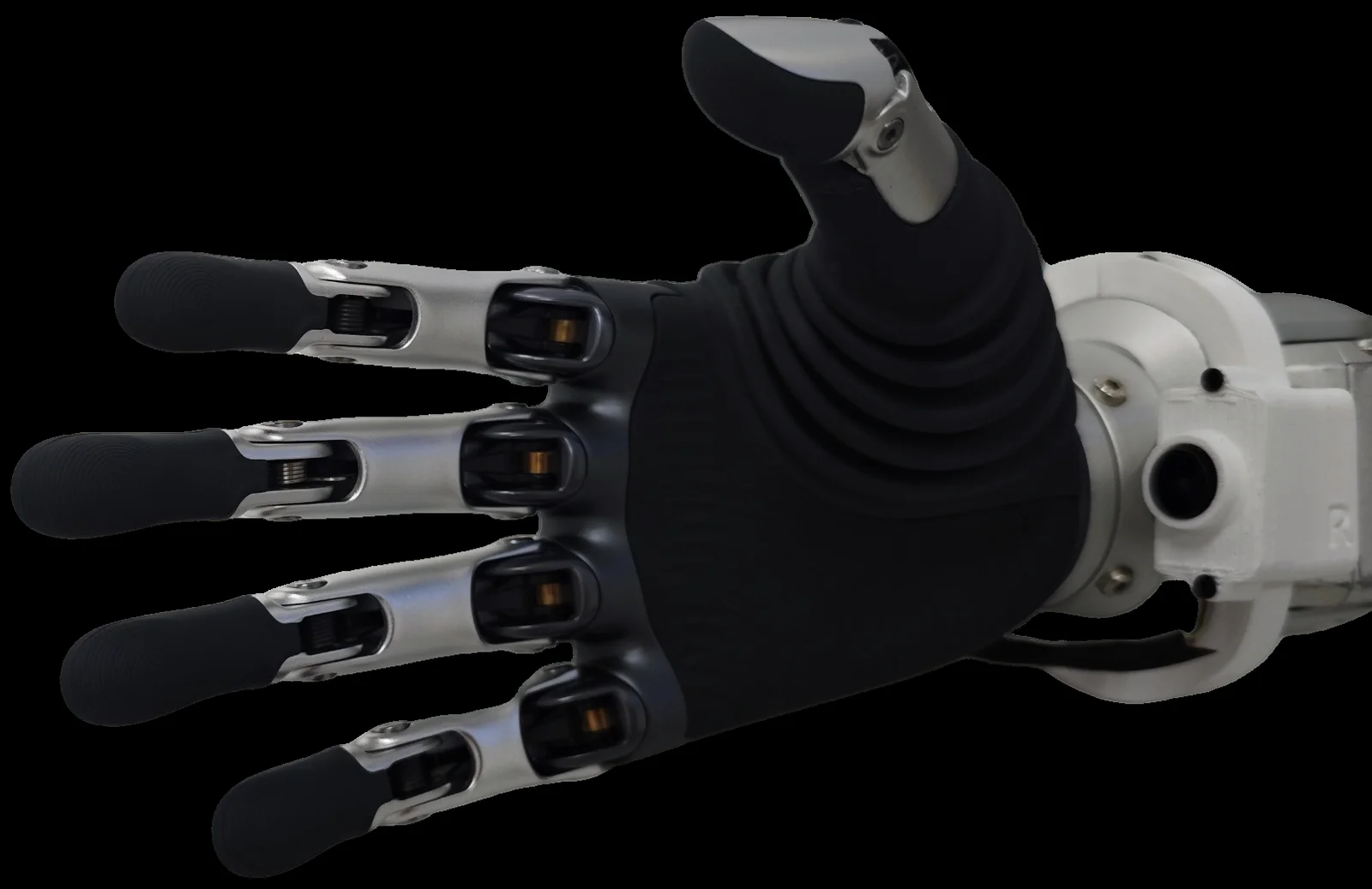
Hand OptionTypePrice (per hand)Best For
Dex1-1 Standard / Advanced (+RGB cam)Parallel gripper, 485 interface$380 / $580Cheapest manipulation entry; pick-and-place teleop data at scale
Tendon-cable hand5-finger, cable-driven, 2 DOF / 10 joints$1,490Clean wiring-free design for demos and long duty cycles
LinkerBot O6 (± tactile)5-finger, 6 DOF / 11 joints, 70 N grip$1,590 / $1,790Budget five-finger work — tactile sensing for $200 more
BrainCo Revo 2 (± tactile)Bionic 5-finger, 50 N grip, 0.1° repeatability$6,680 / $8,680Proven bionic platform; tactile adds pressure, friction, direction, proximity sensing
Dex3-1 (± tactile)Force-controlled 3-finger, 7 DOF, 33 tactile sensors$7,680 / $8,680Force-control research; highest per-hand active DOF in the catalog

All hand prices are per single hand with required cabling and camera mounts included where noted; most buyers order two. Wrist cameras and compute expansion modules (40 TOPS / 100 TOPS) are optional across the line.

The Wheeled -D Chassis: Mobility Without Legs

The R1-A5-D and R1-A7-D mount the same dual-arm torso on a wheeled base with a motorized lift column. Collapsed, the unit stands 683 mm; elevated, the head reaches 1,323 mm — tabletop to countertop working heights without any of the control complexity (or fall risk) of a bipedal platform.

The chassis carries a removable lithium battery (~1.5 hours of runtime) and an external supply, plus a MID360 LiDAR alongside the head's stereo camera — the sensing package mobile-manipulation research actually needs. Compute expands with optional 40 or 100 TOPS modules, and the factory Ultimate bundles (100 TOPS built in) are exclusive to this chassis.

At $8,290 (A5-D) and $8,890 (A7-D), the wheeled models cost roughly what a single-arm leader-follower kit does — for a full bimanual mobile manipulator.

Unitree R1-A-D wheeled dual-arm robot on lift-column mobile chassis for mobile manipulation data collection
Unitree R1-A7 dual-arm robot with 7-DOF arms and parallel grippers for bimanual teleoperation research

A5 or A7? The $600 Question

The A5's 5-DOF arms handle the overwhelming majority of tabletop demonstration tasks — pick, place, stack, sort, hand-to-hand transfer. If you're buying stations for data collection volume, buy A5s and spend the difference on hands.

The A7's 7-DOF arms add redundant kinematics: the elbow can move while the end effector holds pose, which is what lets an arm work around obstacles, reach into containers, and maintain natural approach angles in cluttered scenes. Combined with 555 mm of reach (vs. 420 mm) and a longer 835 mm body, the A7 is the pick for manipulation research — anything where the arm's null space is part of the problem. For $600 more, most single-station labs should take it.

Full Specifications

SpecR1-A5R1-A7R1-A5-D / A7-D
Dimensions700 × 357 × 190 mm835 × 357 × 190 mm683 × 520 × 440 mm collapsed · 1,323 mm elevated
Weight~11 kg~13 kg~30 kg / ~32 kg
Total DOF13 (5×2 arms + waist + 2 head)17 (7×2 arms + waist + 2 head)16 / 20 (adds lift pillar + 2 base)
Per-arm payload~2 kg (varies with arm extension posture)
Arm length (forearm + upper arm)420 mm555 mmPer arm variant
Joint rangeWaist Y: ±150° · Head Y: ±115°, P: ±36°
Joint designLow-inertia inner-rotor PMSM motors · crossed-roller + double-row ball output bearings · dual + single encoders · hollow internal cabling · localized air cooling
Base compute8-core CPU (body) + 8-core CPU with 10 TOPS (head) · optional 40 TOPS module; 100 TOPS optional on -D and A7
SensingHead stereo cameraHead stereo cameraMID360 LiDAR + head stereo camera
Audio / connectivity4-array microphones + dual speakers · Wi-Fi 6 · Bluetooth 5.2 · rear-port power
PowerExternal supply standard; optional upper-body battery (fixed models, ~1.5 hr) · removable chassis battery on -D (~1.5 hr)
TeleoperationDual-hand controllers included as standard
DevelopmentSecondary development supported — dev manuals, robot interfaces, smart OTA updates
Warranty12 months, full unit

Wrist cameras, grippers, and dexterous hands are not included on any base model. Parameters vary by scenario and configuration; maintain safety distance during operation.

🎁 International Order Discount

Ordering from outside the US? We've negotiated a discount with our international fulfillment partner that applies to every R1-A model.

Reveal Discount Code →
BOTINFO2025

3% off orders over $3,000 through our international fulfillment partner — ships worldwide including Canada and Mexico. Every R1-A qualifies. Mention it in the quote form below.

Our Role

BotInfo.ai is an independent procurement gateway. We verify manufacturer and dealer pricing directly, keep it current (this page reflects the July 2026 price list), and route buyers to vetted fulfillment channels that handle purchase orders, institutional billing, and international shipping. We're compensated through fulfillment partnerships, never by marking up hardware — the prices above are the prices.

Verdict

The R1-A does one thing that matters enormously right now: it collapses the cost of a credible bimanual data-collection station to $4,290. For robot-learning groups, that changes the unit of planning from "the rig" to "the fleet." Buy the A5 for data-collection volume, the A7 for manipulation research where kinematic redundancy earns its keep, and a -D chassis when the task list includes moving between workstations. Budget hands separately — a pair of Dex1-1 grippers makes a complete $5,050 station; a pair of tactile Dex3-1s builds a $21,650 dexterity rig that still undercuts a four-arm leader-follower kit.

Two honest caveats. First, the 60–90 day production lead time is real — plan procurement around it, especially against grant deadlines. Second, if your work needs locomotion, the R1-A isn't a shortcut: the full bipedal Unitree R1 starts at $6,870 and is in stock, and the G1-D offers a heavier wheeled dual-arm platform in the G1 family. For everything on a tabletop, though, this is the price-performance line to beat in 2026.

Frequently Asked Questions

What is the Unitree R1-A?
A dual-arm bimanual manipulation platform: the torso, head, waist, and arms of Unitree's R1 humanoid without the legs, mounted on a fixed desktop plate (R1-A5, R1-A7) or a wheeled lift-column chassis (R1-A5-D, R1-A7-D). It's built for robot-learning research, teleoperation data collection, and tabletop manipulation — not for walking.
What's the difference between the R1-A5 and R1-A7?
Arm kinematics and reach. The A5 ($4,290) has two 5-DOF arms with 420 mm reach; the A7 ($4,890) has two 7-DOF arms with 555 mm reach. The A7's redundant kinematics let the elbow reposition while the end effector holds pose — valuable for cluttered scenes and constrained workspaces. For $600, most research buyers should take the A7; volume data-collection fleets should take A5s.
How does the R1-A compare to ALOHA-style rigs?
The R1-A5 at $4,290 is roughly one-sixth the price of a four-arm ALOHA Stationary V2 kit ($27,999.99) and carries more per-arm payload (~2 kg vs. the ~0.75 kg class). The trade-offs: ALOHA rigs use physical leader arms for kinesthetic teaching and ship from US stock with mature LeRobot integration, while the R1-A uses included dual-hand controllers and is built to order (60–90 days). The R1-A's humanoid form factor also means demonstration data maps to Unitree's legged robots.
Can the R1-A collect training data for imitation learning?
Yes — that's its core use case. Dual-hand teleoperation controllers are included as standard, wrist-mounted RGB cameras are available with most hand options, secondary development is fully supported with development manuals and robot interfaces, and optional 40/100 TOPS compute modules run inference on-platform. Labs use platforms in this class for ACT-style imitation learning and LeRobot-ecosystem pipelines.
What's the lead time on an R1-A?
Typically 60–90 days from order confirmation to production completion, plus shipping. No US checkout inventory exists for any A-series model — every order is built to order. If you're purchasing against a grant deadline, start the quote process early; we respond within 24 hours with current production timelines.
What hand and gripper options are available?
Eight options, priced per hand: Dex1-1 parallel gripper ($380 standard / $580 with RGB camera), tendon-cable five-finger hand ($1,490), LinkerBot O6 five-finger ($1,590 / $1,790 tactile), BrainCo Revo 2 bionic five-finger ($6,680 / $8,680 tactile), and Dex3-1 force-controlled three-finger ($7,680 / $8,680 tactile with 33 sensors). No base model includes hands; most buyers order two.
Should I buy the R1-A or the full Unitree R1?
If your work happens at a table or bench, the R1-A — you're not paying for legs, balance control, or fall protection you won't use. If your roadmap requires locomotion, the full bipedal R1 starts at $6,870 and is in stock. A common lab pattern: collect manipulation data on R1-A stations, deploy on the legged R1, since the arm hardware matches.
Can universities buy with a purchase order or grant funds?
Yes. Our fulfillment partners handle institutional purchase orders, quotes on letterhead for grant documentation, and net-terms billing for qualified institutions. Note the 60–90 day production window when planning against grant spending deadlines — we can provide formal quotes and pro-forma invoices quickly to lock in pricing.
Does the R1-A ship internationally?
Yes — worldwide through our international fulfillment partner, including Canada and Mexico. Orders over $3,000 (every R1-A qualifies) are eligible for the BOTINFO2025 discount code, worth 3% off. Mention it in the quote form and we'll apply it to your quote.
Does the R1-A support ROS and secondary development?
Yes. Every R1-A supports secondary development with development manuals and robot interfaces provided, plus smart OTA updates. Base compute is dual 8-core CPUs (10 TOPS in the head); serious on-board inference calls for the optional 40 TOPS module or, on the wheeled -D chassis, the 100 TOPS module available in factory Ultimate bundles.

Get a Verified R1-A Quote

Every A-series model is quote-based. Tell us your configuration — we respond within 24 hours with dealer-verified pricing, current production timelines, and PO documentation if you need it.

✓ 24-hour response · ✓ No obligation

Keep Comparing

Sources: Unitree Robotics official specifications and July 2026 price list, Trossen Robotics published pricing, verified fulfillment channels. Last updated July 13, 2026 · Status: Built to order, 60–90 days.