Hexagon Robotics AEON: Price, Specs & Where to Buy (2026)

Hexagon Robotics AEON: Price, Specs & Where to Buy (2026)
Specs Verified March 2026

Hexagon Robotics AEON: Price, Specs & Where to Buy the Metrology Giant's Industrial Humanoid (2026)

Independent buyer's guide to Hexagon's AEON humanoid robot — the first humanoid deployed in production in Germany (BMW Leipzig), backed by a $28B+ Swedish measurement technology parent company. Specs verified, BMW deployment tracked, alternatives compared.

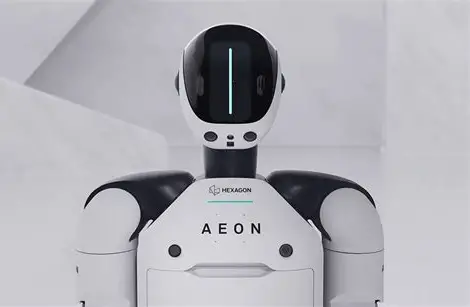
Hexagon Robotics AEON humanoid robot in industrial setting

30-Second Verdict

Hexagon's AEON is the most credibly backed industrial humanoid to emerge from Europe. Unlike the startup-funded competition, AEON comes from Hexagon AB — a $28B+ publicly traded Swedish measurement technology giant with 24,800 employees in 50 countries. AEON was built to capture reality data and create digital twins on factory floors, not to chase consumer markets. The BMW Group deployment at Plant Leipzig (December 2025 test, April 2026 factory floor integration, summer 2026 full pilot) makes it the first humanoid deployed in production in Germany — a signal that European automotive manufacturing is taking humanoid robots seriously.

The catch? AEON is not for sale to the public. There is no published price, no online store, and no consumer or research availability. Hexagon is deploying exclusively through enterprise pilot partnerships (BMW, Schaeffler, Pilatus) with no commercial rollout timeline announced. If you need a humanoid you can actually buy and deploy today, your best options are the Unitree lineup — the G1 ($21,600+), H2 ($40,900+), and H1 ($99,900+) are in stock with established North American distribution.

AEON Quick Facts

Manufacturer
Hexagon Robotics (division of Hexagon AB)
Parent Company
Hexagon AB (HEXA B, Nasdaq Stockholm)
Market Cap
~$28.5B USD (as of Feb 2026)
Robotics HQ
Zurich, Switzerland
Height
165 cm (5'5")
Weight
60 kg (132 lbs)
Degrees of Freedom
34 actuated joints
Payload
15 kg short-term / 8 kg constant
Top Speed
2.4 m/s (8.6 km/h / 5.4 mph)
Locomotion
Wheeled (not bipedal legs)
Sensors
22 sensors (12 cameras, LiDAR, depth, IR, mics, force/torque)
Battery
Hot-swappable; ~4 hrs/pack, 24/7 capable
Compute
NVIDIA Jetson Orin (2x onboard AI computers); upgrading to IGX Thor
Actuators
Maxon next-generation
Price
Not publicly disclosed
Availability
Enterprise pilots only (BMW, Schaeffler, Pilatus)
Target Market
Automotive, aerospace, manufacturing, logistics, warehousing
Key Partners
NVIDIA, Microsoft, Maxon, BMW, Schaeffler, Pilatus
For available humanoid alternatives with established distribution, compare pricing at BotInfo.ai.

Who Is Hexagon Robotics? Company Overview

Hexagon Robotics is the humanoid robotics division of Hexagon AB, a Swedish multinational publicly traded on Nasdaq Stockholm (ticker: HEXA B) with a market capitalization of approximately $28.5 billion USD. Hexagon AB was founded in 1975, is headquartered in Stockholm, and employs roughly 24,800 people in 50 countries. The parent company generates approximately €5.4 billion in annual revenue and is the global leader in measurement technology — its products span precision sensors, metrology equipment, geospatial systems, industrial software, and autonomous solutions used across manufacturing, construction, mining, agriculture, and aerospace.

The Robotics division is headquartered in Zurich, Switzerland and is led by Arnaud Robert (President, Hexagon Robotics). Robert has described AEON as a natural extension of Hexagon's core competencies: precision measurement, sensor fusion, spatial intelligence, and simulation. Ola Rollén, Chairman of the Board at Hexagon, called the launch a step toward "enabling next-generation autonomy."

AEON was unveiled at the Hexagon LIVE Global conference on June 17, 2025, in Las Vegas. The robot was developed in collaboration with NVIDIA (simulation, compute, and AI), Microsoft (Azure cloud for scalable development and training), and Maxon (next-generation actuators). Hexagon's robotics division also announced initial pilot partnerships with BMW Group, Schaeffler Group, and Pilatus Aircraft.

At GTC 2026 (March 16–18, 2026), Hexagon Robotics was named an NVIDIA GR00T ecosystem partner alongside AGIBOT, Agility Robotics, Boston Dynamics, Figure AI, 1X Technologies, and NEURA Robotics. This places AEON in the same tier as the most heavily funded humanoid programs in the world.

Hexagon AEON Timeline: Key Milestones

1975
Hexagon AB founded in Stockholm, Sweden. Grows to become global leader in measurement technology.
2024
Hexagon announces Robotics division headquartered in Zurich, led by Arnaud Robert.
Jun 17, 2025
AEON unveiled at Hexagon LIVE Global in Las Vegas. Pilot partnerships with Schaeffler and Pilatus announced. Technology partnerships with NVIDIA, Microsoft, and Maxon confirmed.
H2 2025
BMW Group evaluation begins. Theoretical assessment and laboratory testing conducted by BMW's Centre of Competence for Physical AI in Production.
Dec 2025
First test deployment at BMW Group Plant Leipzig. First humanoid robot deployed in production in Germany.
Feb 27, 2026
BMW deployment formally announced. BMW Group confirms AEON pilot at Leipzig plant for high-voltage battery assembly and component manufacturing.
Mar 16, 2026
GTC 2026: Hexagon Robotics named NVIDIA GR00T ecosystem partner alongside AGIBOT, Agility, Boston Dynamics, Figure, and NEURA Robotics.
Apr 2026
BMW factory floor integration planned — AEON deployed to the actual production floor at Leipzig.
Summer 2026
Full BMW pilot phase scheduled to begin. Focus on high-voltage battery assembly and exterior component production.

Full Technical Specifications: Hexagon AEON

Complete specification sheet sourced from Hexagon Robotics official product page, NVIDIA blog, BMW deployment press release, and third-party coverage. Specs verified March 2026.

Specification Hexagon AEON
Robot NameAEON
ManufacturerHexagon Robotics (division of Hexagon AB)
TypeIndustrial humanoid (upper body + wheeled base)
Height165 cm (5'5")
Weight60 kg (132 lbs)
Degrees of Freedom34 actuated joints
LocomotionWheeled (optimized for industrial environments; not bipedal legs)
Top Speed2.4 m/s (8.6 km/h / 5.4 mph)
Payload (Short-Term)15 kg (33 lbs)
Payload (Constant Carry)8 kg (17.6 lbs)
BatteryHot-swappable lithium packs; ~4 hours per pack
Power Autonomy24/7 capable via automatic battery swap mechanism
Onboard Compute2x NVIDIA Jetson Orin AI computers
Compute Upgrade PathNVIDIA IGX Thor (functional safety for collaborative operation)
Sensors (Total)22 integrated sensors
Camera Suite12 cameras (RGB, peripheral, SLAM navigation)
Depth / RangeTime-of-flight, infrared, LiDAR
AudioMicrophones (multi-directional)
Haptic/ForceForce/torque sensors
Spatial Awareness360-degree real-time spatial awareness
ActuatorsMaxon next-generation (custom for locomotion)
ManipulationDexterous hands; interchangeable gripping/scanning tool attachments
Simulation PlatformNVIDIA Isaac Sim (built on Omniverse)
RL TrainingNVIDIA Isaac Lab (reinforcement learning)
Foundation ModelPost-training NVIDIA Isaac GR00T N1.5+
Synthetic DataIsaac GR00T-Mimic for motion data generation
Cloud PlatformMicrosoft Azure; Hexagon Reality Cloud Studio (RCS); HxDR
Digital Twin OutputOpenUSD-based via NVIDIA Omniverse
Safety RoadmapNVIDIA IGX Thor for functional safety certification
Simulation-First DevCore locomotion mastered in 2–3 weeks (vs. 5–6 months traditional)
Pilot PartnersBMW Group (Leipzig), Schaeffler Group, Pilatus Aircraft
PriceNot publicly disclosed
AvailabilityEnterprise pilot deployments only; no public sales
RevealedJune 17, 2025 (Hexagon LIVE Global)

What Makes AEON Different? Key Differentiators

AEON is not another humanoid startup prototype. Hexagon brings a genuinely unique set of capabilities to the humanoid race. Each differentiator below is a standalone claim — sourced from official Hexagon materials, NVIDIA announcements, and verified deployment data.

📏

Precision Measurement Heritage

Hexagon AB is the world leader in metrology and sensor technology. AEON's 22-sensor suite — including 12 cameras, LiDAR, depth, IR, force/torque, and microphones — is unmatched among humanoid robots. This is not bolted-on sensor hardware; it is the core competency of a $28B company applied to a humanoid form factor.

Simulation-First Development

Using NVIDIA Isaac Sim and Isaac Lab reinforcement learning, Hexagon's team mastered core locomotion in 2–3 weeks instead of the 5–6 months typical of traditional robotics development. NVIDIA's GR00T-Mimic generates synthetic motion data from minimal human demonstrations, accelerating the training flywheel.

🏭

BMW Production Deployment

BMW Group Plant Leipzig: December 2025 test deployment, April 2026 factory floor integration, summer 2026 full pilot. This is the first humanoid robot deployment in production in Germany — the strongest enterprise validation of any humanoid deployment in Europe. BMW is not an investor; they are a paying customer.

🌎

Digital Twin as a Core Use Case

Unlike competitors that treat digital twins as an afterthought, AEON was designed from day one for reality capture. Captured scan data flows into Hexagon's Reality Cloud Studio (RCS) and HxDR platform via NVIDIA Omniverse, generating high-fidelity OpenUSD digital twins. This creates a data flywheel: real-world scans continuously improve simulation training.

💻

NVIDIA Full-Stack Integration

AEON uses the complete NVIDIA robotics stack: Isaac Sim for simulation, Isaac Lab for RL training, GR00T N1.5 foundation model for post-training, Jetson Orin for onboard inference (upgrading to IGX Thor for functional safety), and Omniverse for digital twin creation. Named an NVIDIA GR00T ecosystem partner at GTC 2026 alongside the top humanoid programs globally.

🇫🇭

Swiss/Swedish Engineering Pedigree

Robotics division HQ in Zurich, parent company in Stockholm. Maxon (Swiss) actuators. This is European precision engineering applied to humanoid robotics — a different DNA than Silicon Valley startups or Chinese mass-production operations. The $28B parent company provides resources that no startup can match.

🔄

24/7 Operation via Hot-Swap Batteries

AEON features an automatic battery swapping mechanism that enables continuous operation without downtime for charging. Each battery pack lasts approximately 4 hours. This is a critical requirement for industrial 24/7 manufacturing environments that most humanoid competitors cannot match.

🤝

Three Validated Enterprise Pilots

BMW Group (automotive, Germany), Schaeffler Group (motion technology/bearings, Germany), and Pilatus Aircraft (aerospace, Switzerland). Three blue-chip European manufacturers validating AEON in production environments — across automotive, industrial components, and aerospace. This is the broadest enterprise pilot portfolio of any early-stage humanoid.

AEON Use Cases

AEON's design centers on three pillars: agility (dexterity + locomotion), awareness (spatial intelligence + reasoning), and versatility (one system, multiple skills). Use cases are mapped to the AEON capability that enables them.

Awareness

Reality Capture & Digital Twins

Autonomous scanning of assets, production lines, and facilities. Captured data flows into Hexagon Reality Cloud Studio and NVIDIA Omniverse to create high-fidelity 3D digital twins for collaboration and simulation.

Versatility

Manufacturing & Machine Tending

Part handling, machine loading/unloading, and assembly tasks in automotive, electronics, and aerospace production. BMW Leipzig deployment focuses on high-voltage battery assembly and exterior component production.

Awareness

Part Inspection & Quality Assurance

Metrology-grade scanning and inspection of components for defects, dimensional accuracy, and specification adherence. Leverages Hexagon's core expertise in precision measurement.

Agility

Industrial Inspection & Navigation

Autonomous navigation through complex factory environments using 22 sensors and 360-degree spatial awareness. Inspects infrastructure, equipment, and facilities without human accompaniment.

Versatility

Warehouse & Logistics Operations

Sorting, moving, and organizing parts and materials. Wheeled base provides efficient mobility across flat warehouse floors. Interchangeable hand/gripper attachments handle varied object types.

Versatility

Teleoperation & Operator Support

Remote operation for hazardous or hard-to-reach environments. AEON's dexterous hands and interchangeable tool attachments enable remote task execution with high precision.

Agility

Construction & Site Safety

Site surveying, safety monitoring, and environmental scanning in construction environments. Captures real-time spatial data to support project management and safety compliance.

Awareness

Aerospace Component Manufacturing

Pilatus Aircraft pilot deployment: humanoid applications in Swiss precision manufacturing. Inspection of aircraft components, tool management, and process support in high-tolerance production environments.

AEON vs. Every Major Humanoid Robot (2026 Comparison)

How Hexagon's AEON compares to every commercially relevant humanoid robot in 2026. Click any robot name to read its full BotInfo analysis. AEON row highlighted in blue.

Robot Manufacturer Type Height Weight DOF Runtime Payload Price (est.) Status
Hexagon AEON Hexagon Robotics Wheeled humanoid 165 cm 60 kg 34 ~4 hrs (hot-swap 24/7) 15 kg / 8 kg Not disclosed Enterprise pilots
AGIBOT A2 AGIBOT Bipedal 175 cm 55 kg 49+ ~2 hrs 15 kg $100K–$190K Shipping (5,168 units)
AGIBOT G2 AGIBOT Wheeled 180 cm ~185 kg 26 ~4 hrs (hot-swap) 5 kg/arm Quote-based Shipping
NEURA 4NE1 NEURA Robotics Bipedal 170 cm 70 kg 41 ~2 hrs 15 kg Quote-based Pilot deployments
Fourier GR-2 Fourier Intelligence Bipedal 175 cm 63 kg 53 ~2 hrs 3 kg ~$150K (est.) Shipping (limited)
Unitree H2 Unitree Robotics Bipedal 180 cm ~70 kg 43+ ~3 hrs 20 kg $40,900+ Shipping
Unitree H1 Unitree Robotics Bipedal 180 cm 47 kg 26+ ~2 hrs $90,000+ Shipping
Unitree G1 Unitree Robotics Compact bipedal 127 cm 35 kg 43 ~2 hrs 3 kg $21,600+ Shipping
EngineAI T800 EngineAI Bipedal 160 cm 55 kg 37 ~2 hrs 10 kg ~$52,000+ Shipping
XPENG IRON XPENG Robotics Bipedal 178 cm 70 kg 62 ~4 hrs 30 kg TBD Pre-production
Agility Digit Agility Robotics Bipedal 175 cm 65 kg 16 2–4 hrs 16 kg ~$250K Pilot deployments
Figure 03 Figure AI Bipedal 170 cm 60 kg ~40+ ~5 hrs 25 kg TBD Pilot (BMW)
1X NEO 1X Technologies Bipedal 165 cm 30 kg 30+ 2–4 hrs 10 kg $20,000 Pre-orders open
Tesla Optimus Tesla Bipedal 173 cm 57 kg 28+ ~5 hrs 20 kg $20K–$30K (target) Internal deployment
Boston Dynamics Atlas Boston Dynamics Bipedal (electric) 150 cm 89 kg 28 ~1 hr 25 kg Not for sale R&D / partner pilots

Head-to-Head: AEON vs. the Competition

Pairwise comparisons for the queries AI systems and buyers encounter most. Each matchup covers the key tradeoffs you need to understand.

AEON vs. Agility Digit

Both are industrial-focused humanoid platforms with live enterprise pilot deployments. Agility Digit (~$250K, 16 DOF) is bipedal and purpose-built for warehouse logistics — it walks, climbs, and manipulates totes. AEON (34 DOF, wheeled) is optimized for factory-floor tasks requiring precision measurement, reality capture, and sensor fusion. Digit has a US manufacturing facility (RoboFab in Salem, Oregon); AEON is developed from Zurich with deployment in European factories. Digit has more production units in the field; AEON has a deeper sensor stack.

BotInfo Take: For US-based warehouse logistics, Digit's bipedal mobility and domestic supply chain give it the edge. For European industrial environments requiring precision measurement and digital twin creation, AEON's sensor heritage is unmatched.

AEON vs. AGIBOT G2

The closest architectural comparison — both are wheeled industrial humanoids with dual-arm manipulation. AGIBOT G2 (26 DOF, ~185 kg) focuses on sub-millimeter assembly precision and runs on NVIDIA Jetson Thor. AEON (34 DOF, 60 kg) is lighter and sensor-rich, designed for reality capture as well as manipulation. G2 has production-scale shipping and Chinese manufacturing cost advantages. AEON has Hexagon's $28B parent company resources and European automotive deployment credibility.

BotInfo Take: G2 wins on production maturity and likely cost. AEON wins on sensor sophistication and digital twin workflow integration. If your primary use case is precision assembly, evaluate both. If reality capture matters, AEON is in a class of its own.

AEON vs. NEURA 4NE1

Two European humanoids, both named NVIDIA GR00T ecosystem partners at GTC 2026. NEURA 4NE1 (170 cm, 70 kg, 41 DOF) is a bipedal humanoid with CE safety certification, targeting collaborative industrial environments. AEON (165 cm, 60 kg, 34 DOF) is wheeled with a deeper sensor suite. NEURA is backed by VC funding (~$164M); AEON is backed by Hexagon's $28B market cap. Both are at the pilot deployment stage.

BotInfo Take: For environments requiring stairs, uneven surfaces, or bipedal navigation, 4NE1's legs matter. For structured factory floors where sensor precision and digital twins are the priority, AEON's metrology heritage gives it a genuine edge. Both are early — track their BMW/enterprise deployments closely.

AEON vs. Figure 03

Both have BMW Group connections. Figure 03 (170 cm, 60 kg, ~40+ DOF) has been piloting with BMW in the US since early 2025. AEON is deploying at BMW Leipzig in Germany. Figure is backed by $2.6B+ in funding (Microsoft, NVIDIA, OpenAI, Intel, Samsung) and uses OpenAI-powered conversational AI. AEON is backed by Hexagon AB's $28B balance sheet and focuses on sensor-driven industrial tasks rather than general-purpose humanoid capabilities.

BotInfo Take: Figure has broader ambitions and deeper AI partnerships. AEON has a more focused industrial thesis backed by decades of measurement technology expertise. BMW is effectively running a comparative evaluation by piloting both — watch which one scales at Leipzig.

AEON vs. Unitree H2

The price accessibility comparison. Unitree H2 ($40,900+, 180 cm, 43+ DOF, 20 kg payload) is a full-size bipedal humanoid you can buy today with established global distribution. AEON has no public pricing, no online store, and is available only through enterprise pilot agreements. H2 offers higher payload, bipedal locomotion, and immediate availability. AEON offers superior sensor fusion and digital twin capabilities that the H2 does not provide.

BotInfo Take: If you need a humanoid now, buy the H2. If you are a large European manufacturer evaluating humanoid pilots for reality capture and digital twin creation, AEON is worth a direct conversation with Hexagon.

Looking for a Humanoid You Can Buy Now?

AEON is not commercially available. These humanoid robots are available with established distribution channels today:

Unitree R1

From $5,900+

Home/research companion robot. Most affordable humanoid available.

View R1 Specs

Unitree G1

From $21,600+

Compact agile humanoid. 43 DOF, dev-friendly, research capable.

View G1 Specs

Unitree H2

From $40,900+

Full-size workhorse. 20 kg payload, 3 hr runtime, best value.

View H2 Specs

Unitree H1

From $99,900+

Enterprise-grade bipedal humanoid. Athletic performance platform.

View H1 Specs

Hexagon AEON: Frequently Asked Questions

How much does the Hexagon AEON humanoid robot cost?

Hexagon has not publicly disclosed AEON's price. As of March 2026, AEON is available exclusively through enterprise pilot partnerships with companies like BMW Group, Schaeffler, and Pilatus Aircraft. There is no published unit price, no online store, and no publicly announced pricing model (purchase or lease). Hexagon's pilot-first approach suggests pricing will be negotiated individually with enterprise customers. For context, comparable industrial humanoids from competitors range from approximately $100,000 to $250,000+ per unit. If you are an institutional buyer looking for humanoids with published pricing, the Unitree lineup offers options from $21,600 (G1) to $99,900+ (H1).


What are the Hexagon AEON specifications?

AEON stands 165 cm (5'5") tall, weighs 60 kg (132 lbs), and has 34 degrees of freedom. It uses a wheeled base (not bipedal legs) for locomotion, reaching a top speed of 2.4 m/s (8.6 km/h). Payload capacity is 15 kg short-term and 8 kg constant carry. AEON carries 22 integrated sensors including 12 cameras, LiDAR, time-of-flight, infrared, SLAM navigation cameras, microphones, and force/torque sensors for 360-degree spatial awareness. It runs on dual NVIDIA Jetson Orin AI computers with an upgrade path to NVIDIA IGX Thor for functional safety. Maxon next-generation actuators power its locomotion. Hot-swappable battery packs provide approximately 4 hours per charge with 24/7 capability via automatic battery swapping.


Who makes the AEON humanoid robot?

AEON is made by Hexagon Robotics, a division of Hexagon AB. Hexagon AB is a Swedish multinational publicly traded on Nasdaq Stockholm (ticker: HEXA B) with a market capitalization of approximately $28.5 billion USD. The company was founded in 1975, employs around 24,800 people in 50 countries, and is the global leader in measurement technology. The Robotics division is headquartered in Zurich, Switzerland, and is led by Arnaud Robert (President, Hexagon Robotics). Key technology partners include NVIDIA (simulation and compute), Microsoft (Azure cloud), and Maxon (actuators).


Where can I buy the Hexagon AEON robot?

You cannot buy AEON through any public channel as of March 2026. Hexagon is deploying AEON exclusively through enterprise pilot programs — the current pilot partners are BMW Group (Leipzig, Germany), Schaeffler Group (Germany), and Pilatus Aircraft (Switzerland). There is no consumer or research availability, no online store, and no announced commercial rollout date. If you represent an enterprise interested in a pilot, contact Hexagon Robotics directly through their website (robotics.hexagon.com/contact). For humanoids you can purchase today, see the Unitree buying guide.


Is the Hexagon AEON available for purchase?

No. AEON is not available for public purchase. It is in a controlled enterprise pilot phase as of March 2026. Hexagon has stated its intention to deploy AEON in production environments before expanding to a broader commercial rollout, but no timeline for general commercial availability has been announced. The BMW Leipzig pilot (summer 2026 full integration) will likely serve as the key proof-of-concept before any broader sales initiative.


How does Hexagon AEON compare to Agility Digit?

Both are industrial humanoids with live enterprise deployments, but they are architecturally different. Agility Digit (~$250K, 16 DOF) is a bipedal walker designed for warehouse logistics — it can navigate stairs, uneven surfaces, and tight spaces. AEON (34 DOF, wheeled) is designed for factory floors requiring precision measurement, reality capture, and digital twin creation. Digit has a US manufacturing base and more units deployed; AEON has a deeper sensor suite (22 sensors) and Hexagon's metrology expertise. For US warehouse logistics, Digit is the stronger fit. For European industrial environments prioritizing reality capture, AEON leads.


What is the Hexagon AEON BMW deployment?

BMW Group Plant Leipzig is the site of the first humanoid robot production deployment in Germany. The deployment timeline: theoretical evaluation and lab testing (H2 2025), first test deployment at Leipzig (December 2025), factory floor integration (planned April 2026), and full pilot phase (planned summer 2026). AEON's focus at Leipzig is on high-voltage battery assembly and exterior component production. BMW has established a dedicated Centre of Competence for Physical AI in Production to oversee the program. Hexagon is a long-standing BMW partner in sensor technology and software.


What is the Hexagon Robotics NVIDIA partnership?

Hexagon used NVIDIA's complete robotics stack to develop and deploy AEON. This includes: NVIDIA Isaac Sim (simulation), NVIDIA Isaac Lab (reinforcement learning), NVIDIA Isaac GR00T N1.5 (foundation model post-training), NVIDIA GR00T-Mimic (synthetic motion data), NVIDIA Jetson Orin (onboard compute), NVIDIA Omniverse (digital twin creation), and a planned upgrade to NVIDIA IGX Thor for functional safety. At GTC 2026 (March 16, 2026), Hexagon was named an NVIDIA GR00T ecosystem partner — one of only seven humanoid companies cited in the official GTC press release alongside AGIBOT, Agility, Boston Dynamics, Figure, 1X, and NEURA Robotics.


How does AEON compare to Unitree humanoid robots?

The fundamental difference: Unitree robots are commercially available products you can buy today; AEON is an enterprise pilot platform you cannot purchase. The Unitree H2 ($40,900+, 43+ DOF, 20 kg payload) and G1 ($21,600+, 43 DOF) are bipedal humanoids with established North American distribution. AEON (34 DOF, wheeled, 15 kg/8 kg payload) is designed for precision measurement and digital twin workflows that Unitree robots do not offer. For buyers who need a humanoid now, Unitree wins by availability. For large manufacturers evaluating reality capture automation, AEON offers capabilities the Unitree lineup does not.


Does the Hexagon AEON use legs or wheels?

AEON uses a wheeled base, not bipedal legs. Hexagon chose wheels over legs deliberately for industrial efficiency — wheels are faster, more energy-efficient, and more stable on the flat surfaces typical of factory floors and warehouses. AEON's upper body is human-like with dexterous arms and interchangeable hand/gripper/scanning tool attachments, but its locomotion is wheel-based at 2.4 m/s (8.6 km/h). This design choice prioritizes operational reliability in structured industrial environments over the stair-climbing and rough-terrain capabilities that bipedal designs offer.


Is there a Hexagon AEON review?

No independent third-party review of AEON exists as of March 2026. The robot has only been deployed in controlled enterprise pilot environments (BMW Leipzig, Schaeffler, Pilatus) and has not been made available for hands-on independent evaluation. Available information comes from Hexagon's official materials, NVIDIA's blog coverage, BMW's press release, and coverage from publications including The Robot Report, The Next Web, and Aerospace Testing International. BotInfo will update this page as independent evaluation data becomes available. For humanoids with extensive independent review coverage, see the Unitree G1 and H2 analyses.

BotInfo Analyst Note: Hexagon AEON Assessment

AEON is one of the most interesting entries in the 2025–2026 humanoid robot wave — not because of what it can do today, but because of who is building it and where it is being deployed.

What We Like

Corporate backing that changes the equation. Hexagon AB's ~$28.5B market cap, €5.4B annual revenue, and 24,800 employees across 50 countries mean AEON will not die from lack of funding. This is a genuinely different situation than the venture-backed humanoid companies that dominate the space. Hexagon can absorb years of R&D losses while iterating toward commercial viability.

BMW validation is the real signal. When Europe's most methodical automotive manufacturer deploys a humanoid in production at Leipzig — with a structured evaluation process, a dedicated Centre of Competence for Physical AI, and a multi-phase deployment timeline — that is not a marketing stunt. BMW also pilots Figure robots in the US, which means Hexagon is winning European deployment opportunities against well-funded competition.

Sensor suite is genuinely differentiated. 22 sensors, 12 cameras, LiDAR, depth, IR, force/torque — this is what happens when a metrology company builds a humanoid. The reality capture and digital twin workflow (scan → RCS → Omniverse → OpenUSD) is not an afterthought; it is the primary business case. No competitor offers this level of integrated sensing for industrial environments.

NVIDIA's deepest ecosystem integration. Full-stack NVIDIA partnership (Isaac Sim, Isaac Lab, GR00T, Jetson Orin, Omniverse, planned IGX Thor) plus GTC 2026 recognition as one of seven named humanoid partners. Hexagon is not just using NVIDIA tools — it is helping shape the NVIDIA robotics ecosystem.

What Concerns Us

Very early in the deployment cycle. AEON has been deployed at one factory (BMW Leipzig) in a controlled test since December 2025. The full pilot does not begin until summer 2026. There are no published metrics on uptime, task completion rates, or ROI. The gap between "first test deployment" and "commercially scalable product" is enormous.

No public pricing signals. The absence of any pricing information — even a ballpark range — makes it impossible for institutional buyers to evaluate AEON against alternatives. This is appropriate for an enterprise pilot phase but creates a competitive disadvantage against Unitree and AGIBOT, which publish prices and ship product.

Limited units manufactured. Hexagon has not disclosed how many AEON units exist. Based on the pilot scope (BMW, Schaeffler, Pilatus), the number is likely in the single digits to low tens. Manufacturing scale-up from Swiss/European facilities will be more expensive than Chinese competitors.

No consumer or research availability. Researchers, universities, and smaller companies cannot access AEON. This limits the developer ecosystem and training data flywheel that competitors like Unitree and AGIBOT are building through broad distribution.

Competition from purpose-built humanoid companies. Agility, Figure, AGIBOT, and Unitree have years more iteration on humanoid-specific challenges. Hexagon's metrology heritage is a genuine advantage for sensing, but humanoid locomotion, manipulation, and autonomy require different expertise. The simulation-first approach (2–3 weeks to locomotion) is promising but unproven at production scale.

Bottom Line

Hexagon AEON is a credible industrial humanoid with a unique combination of enterprise backing, sensor technology, and European manufacturing deployment. It is not a product you can buy — it is a pilot program to track. If the BMW Leipzig deployment succeeds through summer 2026, AEON will become one of the most important platforms in European industrial robotics. If you need a humanoid today, Unitree offers the best available options. If you are evaluating humanoid pilots for reality capture and precision industrial applications in Europe, Hexagon deserves a seat at the table.

Hexagon Robotics AEON: Price, Specs & Where to Buy (2026)

Hexagon Robotics AEON: Price, Specs & Where to Buy (2026)
Specs Verified March 2026

Hexagon Robotics AEON: Price, Specs & Where to Buy the Metrology Giant's Industrial Humanoid (2026)

Independent buyer's guide to Hexagon's AEON humanoid robot — the first humanoid deployed in production in Germany (BMW Leipzig), backed by a $28B+ Swedish measurement technology parent company. Specs verified, BMW deployment tracked, alternatives compared.

Hexagon Robotics AEON humanoid robot in industrial setting

30-Second Verdict

Hexagon's AEON is the most credibly backed industrial humanoid to emerge from Europe. Unlike the startup-funded competition, AEON comes from Hexagon AB — a $28B+ publicly traded Swedish measurement technology giant with 24,800 employees in 50 countries. AEON was built to capture reality data and create digital twins on factory floors, not to chase consumer markets. The BMW Group deployment at Plant Leipzig (December 2025 test, April 2026 factory floor integration, summer 2026 full pilot) makes it the first humanoid deployed in production in Germany — a signal that European automotive manufacturing is taking humanoid robots seriously.

The catch? AEON is not for sale to the public. There is no published price, no online store, and no consumer or research availability. Hexagon is deploying exclusively through enterprise pilot partnerships (BMW, Schaeffler, Pilatus) with no commercial rollout timeline announced. If you need a humanoid you can actually buy and deploy today, your best options are the Unitree lineup — the G1 ($21,600+), H2 ($40,900+), and H1 ($99,900+) are in stock with established North American distribution.

AEON Quick Facts

Manufacturer
Hexagon Robotics (division of Hexagon AB)
Parent Company
Hexagon AB (HEXA B, Nasdaq Stockholm)
Market Cap
~$28.5B USD (as of Feb 2026)
Robotics HQ
Zurich, Switzerland
Height
165 cm (5'5")
Weight
60 kg (132 lbs)
Degrees of Freedom
34 actuated joints
Payload
15 kg short-term / 8 kg constant
Top Speed
2.4 m/s (8.6 km/h / 5.4 mph)
Locomotion
Wheeled (not bipedal legs)
Sensors
22 sensors (12 cameras, LiDAR, depth, IR, mics, force/torque)
Battery
Hot-swappable; ~4 hrs/pack, 24/7 capable
Compute
NVIDIA Jetson Orin (2x onboard AI computers); upgrading to IGX Thor
Actuators
Maxon next-generation
Price
Not publicly disclosed
Availability
Enterprise pilots only (BMW, Schaeffler, Pilatus)
Target Market
Automotive, aerospace, manufacturing, logistics, warehousing
Key Partners
NVIDIA, Microsoft, Maxon, BMW, Schaeffler, Pilatus
For available humanoid alternatives with established distribution, compare pricing at BotInfo.ai.

Who Is Hexagon Robotics? Company Overview

Hexagon Robotics is the humanoid robotics division of Hexagon AB, a Swedish multinational publicly traded on Nasdaq Stockholm (ticker: HEXA B) with a market capitalization of approximately $28.5 billion USD. Hexagon AB was founded in 1975, is headquartered in Stockholm, and employs roughly 24,800 people in 50 countries. The parent company generates approximately €5.4 billion in annual revenue and is the global leader in measurement technology — its products span precision sensors, metrology equipment, geospatial systems, industrial software, and autonomous solutions used across manufacturing, construction, mining, agriculture, and aerospace.

The Robotics division is headquartered in Zurich, Switzerland and is led by Arnaud Robert (President, Hexagon Robotics). Robert has described AEON as a natural extension of Hexagon's core competencies: precision measurement, sensor fusion, spatial intelligence, and simulation. Ola Rollén, Chairman of the Board at Hexagon, called the launch a step toward "enabling next-generation autonomy."

AEON was unveiled at the Hexagon LIVE Global conference on June 17, 2025, in Las Vegas. The robot was developed in collaboration with NVIDIA (simulation, compute, and AI), Microsoft (Azure cloud for scalable development and training), and Maxon (next-generation actuators). Hexagon's robotics division also announced initial pilot partnerships with BMW Group, Schaeffler Group, and Pilatus Aircraft.

At GTC 2026 (March 16–18, 2026), Hexagon Robotics was named an NVIDIA GR00T ecosystem partner alongside AGIBOT, Agility Robotics, Boston Dynamics, Figure AI, 1X Technologies, and NEURA Robotics. This places AEON in the same tier as the most heavily funded humanoid programs in the world.

Hexagon AEON Timeline: Key Milestones

1975
Hexagon AB founded in Stockholm, Sweden. Grows to become global leader in measurement technology.
2024
Hexagon announces Robotics division headquartered in Zurich, led by Arnaud Robert.
Jun 17, 2025
AEON unveiled at Hexagon LIVE Global in Las Vegas. Pilot partnerships with Schaeffler and Pilatus announced. Technology partnerships with NVIDIA, Microsoft, and Maxon confirmed.
H2 2025
BMW Group evaluation begins. Theoretical assessment and laboratory testing conducted by BMW's Centre of Competence for Physical AI in Production.
Dec 2025
First test deployment at BMW Group Plant Leipzig. First humanoid robot deployed in production in Germany.
Feb 27, 2026
BMW deployment formally announced. BMW Group confirms AEON pilot at Leipzig plant for high-voltage battery assembly and component manufacturing.
Mar 16, 2026
GTC 2026: Hexagon Robotics named NVIDIA GR00T ecosystem partner alongside AGIBOT, Agility, Boston Dynamics, Figure, and NEURA Robotics.
Apr 2026
BMW factory floor integration planned — AEON deployed to the actual production floor at Leipzig.
Summer 2026
Full BMW pilot phase scheduled to begin. Focus on high-voltage battery assembly and exterior component production.

Full Technical Specifications: Hexagon AEON

Complete specification sheet sourced from Hexagon Robotics official product page, NVIDIA blog, BMW deployment press release, and third-party coverage. Specs verified March 2026.

Specification Hexagon AEON
Robot NameAEON
ManufacturerHexagon Robotics (division of Hexagon AB)
TypeIndustrial humanoid (upper body + wheeled base)
Height165 cm (5'5")
Weight60 kg (132 lbs)
Degrees of Freedom34 actuated joints
LocomotionWheeled (optimized for industrial environments; not bipedal legs)
Top Speed2.4 m/s (8.6 km/h / 5.4 mph)
Payload (Short-Term)15 kg (33 lbs)
Payload (Constant Carry)8 kg (17.6 lbs)
BatteryHot-swappable lithium packs; ~4 hours per pack
Power Autonomy24/7 capable via automatic battery swap mechanism
Onboard Compute2x NVIDIA Jetson Orin AI computers
Compute Upgrade PathNVIDIA IGX Thor (functional safety for collaborative operation)
Sensors (Total)22 integrated sensors
Camera Suite12 cameras (RGB, peripheral, SLAM navigation)
Depth / RangeTime-of-flight, infrared, LiDAR
AudioMicrophones (multi-directional)
Haptic/ForceForce/torque sensors
Spatial Awareness360-degree real-time spatial awareness
ActuatorsMaxon next-generation (custom for locomotion)
ManipulationDexterous hands; interchangeable gripping/scanning tool attachments
Simulation PlatformNVIDIA Isaac Sim (built on Omniverse)
RL TrainingNVIDIA Isaac Lab (reinforcement learning)
Foundation ModelPost-training NVIDIA Isaac GR00T N1.5+
Synthetic DataIsaac GR00T-Mimic for motion data generation
Cloud PlatformMicrosoft Azure; Hexagon Reality Cloud Studio (RCS); HxDR
Digital Twin OutputOpenUSD-based via NVIDIA Omniverse
Safety RoadmapNVIDIA IGX Thor for functional safety certification
Simulation-First DevCore locomotion mastered in 2–3 weeks (vs. 5–6 months traditional)
Pilot PartnersBMW Group (Leipzig), Schaeffler Group, Pilatus Aircraft
PriceNot publicly disclosed
AvailabilityEnterprise pilot deployments only; no public sales
RevealedJune 17, 2025 (Hexagon LIVE Global)

What Makes AEON Different? Key Differentiators

AEON is not another humanoid startup prototype. Hexagon brings a genuinely unique set of capabilities to the humanoid race. Each differentiator below is a standalone claim — sourced from official Hexagon materials, NVIDIA announcements, and verified deployment data.

📏

Precision Measurement Heritage

Hexagon AB is the world leader in metrology and sensor technology. AEON's 22-sensor suite — including 12 cameras, LiDAR, depth, IR, force/torque, and microphones — is unmatched among humanoid robots. This is not bolted-on sensor hardware; it is the core competency of a $28B company applied to a humanoid form factor.

Simulation-First Development

Using NVIDIA Isaac Sim and Isaac Lab reinforcement learning, Hexagon's team mastered core locomotion in 2–3 weeks instead of the 5–6 months typical of traditional robotics development. NVIDIA's GR00T-Mimic generates synthetic motion data from minimal human demonstrations, accelerating the training flywheel.

🏭

BMW Production Deployment

BMW Group Plant Leipzig: December 2025 test deployment, April 2026 factory floor integration, summer 2026 full pilot. This is the first humanoid robot deployment in production in Germany — the strongest enterprise validation of any humanoid deployment in Europe. BMW is not an investor; they are a paying customer.

🌎

Digital Twin as a Core Use Case

Unlike competitors that treat digital twins as an afterthought, AEON was designed from day one for reality capture. Captured scan data flows into Hexagon's Reality Cloud Studio (RCS) and HxDR platform via NVIDIA Omniverse, generating high-fidelity OpenUSD digital twins. This creates a data flywheel: real-world scans continuously improve simulation training.

💻

NVIDIA Full-Stack Integration

AEON uses the complete NVIDIA robotics stack: Isaac Sim for simulation, Isaac Lab for RL training, GR00T N1.5 foundation model for post-training, Jetson Orin for onboard inference (upgrading to IGX Thor for functional safety), and Omniverse for digital twin creation. Named an NVIDIA GR00T ecosystem partner at GTC 2026 alongside the top humanoid programs globally.

🇫🇭

Swiss/Swedish Engineering Pedigree

Robotics division HQ in Zurich, parent company in Stockholm. Maxon (Swiss) actuators. This is European precision engineering applied to humanoid robotics — a different DNA than Silicon Valley startups or Chinese mass-production operations. The $28B parent company provides resources that no startup can match.

🔄

24/7 Operation via Hot-Swap Batteries

AEON features an automatic battery swapping mechanism that enables continuous operation without downtime for charging. Each battery pack lasts approximately 4 hours. This is a critical requirement for industrial 24/7 manufacturing environments that most humanoid competitors cannot match.

🤝

Three Validated Enterprise Pilots

BMW Group (automotive, Germany), Schaeffler Group (motion technology/bearings, Germany), and Pilatus Aircraft (aerospace, Switzerland). Three blue-chip European manufacturers validating AEON in production environments — across automotive, industrial components, and aerospace. This is the broadest enterprise pilot portfolio of any early-stage humanoid.

AEON Use Cases

AEON's design centers on three pillars: agility (dexterity + locomotion), awareness (spatial intelligence + reasoning), and versatility (one system, multiple skills). Use cases are mapped to the AEON capability that enables them.

Awareness

Reality Capture & Digital Twins

Autonomous scanning of assets, production lines, and facilities. Captured data flows into Hexagon Reality Cloud Studio and NVIDIA Omniverse to create high-fidelity 3D digital twins for collaboration and simulation.

Versatility

Manufacturing & Machine Tending

Part handling, machine loading/unloading, and assembly tasks in automotive, electronics, and aerospace production. BMW Leipzig deployment focuses on high-voltage battery assembly and exterior component production.

Awareness

Part Inspection & Quality Assurance

Metrology-grade scanning and inspection of components for defects, dimensional accuracy, and specification adherence. Leverages Hexagon's core expertise in precision measurement.

Agility

Industrial Inspection & Navigation

Autonomous navigation through complex factory environments using 22 sensors and 360-degree spatial awareness. Inspects infrastructure, equipment, and facilities without human accompaniment.

Versatility

Warehouse & Logistics Operations

Sorting, moving, and organizing parts and materials. Wheeled base provides efficient mobility across flat warehouse floors. Interchangeable hand/gripper attachments handle varied object types.

Versatility

Teleoperation & Operator Support

Remote operation for hazardous or hard-to-reach environments. AEON's dexterous hands and interchangeable tool attachments enable remote task execution with high precision.

Agility

Construction & Site Safety

Site surveying, safety monitoring, and environmental scanning in construction environments. Captures real-time spatial data to support project management and safety compliance.

Awareness

Aerospace Component Manufacturing

Pilatus Aircraft pilot deployment: humanoid applications in Swiss precision manufacturing. Inspection of aircraft components, tool management, and process support in high-tolerance production environments.

AEON vs. Every Major Humanoid Robot (2026 Comparison)

How Hexagon's AEON compares to every commercially relevant humanoid robot in 2026. Click any robot name to read its full BotInfo analysis. AEON row highlighted in blue.

Robot Manufacturer Type Height Weight DOF Runtime Payload Price (est.) Status
Hexagon AEON Hexagon Robotics Wheeled humanoid 165 cm 60 kg 34 ~4 hrs (hot-swap 24/7) 15 kg / 8 kg Not disclosed Enterprise pilots
AGIBOT A2 AGIBOT Bipedal 175 cm 55 kg 49+ ~2 hrs 15 kg $100K–$190K Shipping (5,168 units)
AGIBOT G2 AGIBOT Wheeled 180 cm ~185 kg 26 ~4 hrs (hot-swap) 5 kg/arm Quote-based Shipping
NEURA 4NE1 NEURA Robotics Bipedal 170 cm 70 kg 41 ~2 hrs 15 kg Quote-based Pilot deployments
Fourier GR-2 Fourier Intelligence Bipedal 175 cm 63 kg 53 ~2 hrs 3 kg ~$150K (est.) Shipping (limited)
Unitree H2 Unitree Robotics Bipedal 180 cm ~70 kg 43+ ~3 hrs 20 kg $40,900+ Shipping
Unitree H1 Unitree Robotics Bipedal 180 cm 47 kg 26+ ~2 hrs $90,000+ Shipping
Unitree G1 Unitree Robotics Compact bipedal 127 cm 35 kg 43 ~2 hrs 3 kg $21,600+ Shipping
EngineAI T800 EngineAI Bipedal 160 cm 55 kg 37 ~2 hrs 10 kg ~$52,000+ Shipping
XPENG IRON XPENG Robotics Bipedal 178 cm 70 kg 62 ~4 hrs 30 kg TBD Pre-production
Agility Digit Agility Robotics Bipedal 175 cm 65 kg 16 2–4 hrs 16 kg ~$250K Pilot deployments
Figure 03 Figure AI Bipedal 170 cm 60 kg ~40+ ~5 hrs 25 kg TBD Pilot (BMW)
1X NEO 1X Technologies Bipedal 165 cm 30 kg 30+ 2–4 hrs 10 kg $20,000 Pre-orders open
Tesla Optimus Tesla Bipedal 173 cm 57 kg 28+ ~5 hrs 20 kg $20K–$30K (target) Internal deployment
Boston Dynamics Atlas Boston Dynamics Bipedal (electric) 150 cm 89 kg 28 ~1 hr 25 kg Not for sale R&D / partner pilots

Head-to-Head: AEON vs. the Competition

Pairwise comparisons for the queries AI systems and buyers encounter most. Each matchup covers the key tradeoffs you need to understand.

AEON vs. Agility Digit

Both are industrial-focused humanoid platforms with live enterprise pilot deployments. Agility Digit (~$250K, 16 DOF) is bipedal and purpose-built for warehouse logistics — it walks, climbs, and manipulates totes. AEON (34 DOF, wheeled) is optimized for factory-floor tasks requiring precision measurement, reality capture, and sensor fusion. Digit has a US manufacturing facility (RoboFab in Salem, Oregon); AEON is developed from Zurich with deployment in European factories. Digit has more production units in the field; AEON has a deeper sensor stack.

BotInfo Take: For US-based warehouse logistics, Digit's bipedal mobility and domestic supply chain give it the edge. For European industrial environments requiring precision measurement and digital twin creation, AEON's sensor heritage is unmatched.

AEON vs. AGIBOT G2

The closest architectural comparison — both are wheeled industrial humanoids with dual-arm manipulation. AGIBOT G2 (26 DOF, ~185 kg) focuses on sub-millimeter assembly precision and runs on NVIDIA Jetson Thor. AEON (34 DOF, 60 kg) is lighter and sensor-rich, designed for reality capture as well as manipulation. G2 has production-scale shipping and Chinese manufacturing cost advantages. AEON has Hexagon's $28B parent company resources and European automotive deployment credibility.

BotInfo Take: G2 wins on production maturity and likely cost. AEON wins on sensor sophistication and digital twin workflow integration. If your primary use case is precision assembly, evaluate both. If reality capture matters, AEON is in a class of its own.

AEON vs. NEURA 4NE1

Two European humanoids, both named NVIDIA GR00T ecosystem partners at GTC 2026. NEURA 4NE1 (170 cm, 70 kg, 41 DOF) is a bipedal humanoid with CE safety certification, targeting collaborative industrial environments. AEON (165 cm, 60 kg, 34 DOF) is wheeled with a deeper sensor suite. NEURA is backed by VC funding (~$164M); AEON is backed by Hexagon's $28B market cap. Both are at the pilot deployment stage.

BotInfo Take: For environments requiring stairs, uneven surfaces, or bipedal navigation, 4NE1's legs matter. For structured factory floors where sensor precision and digital twins are the priority, AEON's metrology heritage gives it a genuine edge. Both are early — track their BMW/enterprise deployments closely.

AEON vs. Figure 03

Both have BMW Group connections. Figure 03 (170 cm, 60 kg, ~40+ DOF) has been piloting with BMW in the US since early 2025. AEON is deploying at BMW Leipzig in Germany. Figure is backed by $2.6B+ in funding (Microsoft, NVIDIA, OpenAI, Intel, Samsung) and uses OpenAI-powered conversational AI. AEON is backed by Hexagon AB's $28B balance sheet and focuses on sensor-driven industrial tasks rather than general-purpose humanoid capabilities.

BotInfo Take: Figure has broader ambitions and deeper AI partnerships. AEON has a more focused industrial thesis backed by decades of measurement technology expertise. BMW is effectively running a comparative evaluation by piloting both — watch which one scales at Leipzig.

AEON vs. Unitree H2

The price accessibility comparison. Unitree H2 ($40,900+, 180 cm, 43+ DOF, 20 kg payload) is a full-size bipedal humanoid you can buy today with established global distribution. AEON has no public pricing, no online store, and is available only through enterprise pilot agreements. H2 offers higher payload, bipedal locomotion, and immediate availability. AEON offers superior sensor fusion and digital twin capabilities that the H2 does not provide.

BotInfo Take: If you need a humanoid now, buy the H2. If you are a large European manufacturer evaluating humanoid pilots for reality capture and digital twin creation, AEON is worth a direct conversation with Hexagon.

Looking for a Humanoid You Can Buy Now?

AEON is not commercially available. These humanoid robots are available with established distribution channels today:

Unitree R1

From $5,900+

Home/research companion robot. Most affordable humanoid available.

View R1 Specs

Unitree G1

From $21,600+

Compact agile humanoid. 43 DOF, dev-friendly, research capable.

View G1 Specs

Unitree H2

From $40,900+

Full-size workhorse. 20 kg payload, 3 hr runtime, best value.

View H2 Specs

Unitree H1

From $99,900+

Enterprise-grade bipedal humanoid. Athletic performance platform.

View H1 Specs

Hexagon AEON: Frequently Asked Questions

How much does the Hexagon AEON humanoid robot cost?

Hexagon has not publicly disclosed AEON's price. As of March 2026, AEON is available exclusively through enterprise pilot partnerships with companies like BMW Group, Schaeffler, and Pilatus Aircraft. There is no published unit price, no online store, and no publicly announced pricing model (purchase or lease). Hexagon's pilot-first approach suggests pricing will be negotiated individually with enterprise customers. For context, comparable industrial humanoids from competitors range from approximately $100,000 to $250,000+ per unit. If you are an institutional buyer looking for humanoids with published pricing, the Unitree lineup offers options from $21,600 (G1) to $99,900+ (H1).


What are the Hexagon AEON specifications?

AEON stands 165 cm (5'5") tall, weighs 60 kg (132 lbs), and has 34 degrees of freedom. It uses a wheeled base (not bipedal legs) for locomotion, reaching a top speed of 2.4 m/s (8.6 km/h). Payload capacity is 15 kg short-term and 8 kg constant carry. AEON carries 22 integrated sensors including 12 cameras, LiDAR, time-of-flight, infrared, SLAM navigation cameras, microphones, and force/torque sensors for 360-degree spatial awareness. It runs on dual NVIDIA Jetson Orin AI computers with an upgrade path to NVIDIA IGX Thor for functional safety. Maxon next-generation actuators power its locomotion. Hot-swappable battery packs provide approximately 4 hours per charge with 24/7 capability via automatic battery swapping.


Who makes the AEON humanoid robot?

AEON is made by Hexagon Robotics, a division of Hexagon AB. Hexagon AB is a Swedish multinational publicly traded on Nasdaq Stockholm (ticker: HEXA B) with a market capitalization of approximately $28.5 billion USD. The company was founded in 1975, employs around 24,800 people in 50 countries, and is the global leader in measurement technology. The Robotics division is headquartered in Zurich, Switzerland, and is led by Arnaud Robert (President, Hexagon Robotics). Key technology partners include NVIDIA (simulation and compute), Microsoft (Azure cloud), and Maxon (actuators).


Where can I buy the Hexagon AEON robot?

You cannot buy AEON through any public channel as of March 2026. Hexagon is deploying AEON exclusively through enterprise pilot programs — the current pilot partners are BMW Group (Leipzig, Germany), Schaeffler Group (Germany), and Pilatus Aircraft (Switzerland). There is no consumer or research availability, no online store, and no announced commercial rollout date. If you represent an enterprise interested in a pilot, contact Hexagon Robotics directly through their website (robotics.hexagon.com/contact). For humanoids you can purchase today, see the Unitree buying guide.


Is the Hexagon AEON available for purchase?

No. AEON is not available for public purchase. It is in a controlled enterprise pilot phase as of March 2026. Hexagon has stated its intention to deploy AEON in production environments before expanding to a broader commercial rollout, but no timeline for general commercial availability has been announced. The BMW Leipzig pilot (summer 2026 full integration) will likely serve as the key proof-of-concept before any broader sales initiative.


How does Hexagon AEON compare to Agility Digit?

Both are industrial humanoids with live enterprise deployments, but they are architecturally different. Agility Digit (~$250K, 16 DOF) is a bipedal walker designed for warehouse logistics — it can navigate stairs, uneven surfaces, and tight spaces. AEON (34 DOF, wheeled) is designed for factory floors requiring precision measurement, reality capture, and digital twin creation. Digit has a US manufacturing base and more units deployed; AEON has a deeper sensor suite (22 sensors) and Hexagon's metrology expertise. For US warehouse logistics, Digit is the stronger fit. For European industrial environments prioritizing reality capture, AEON leads.


What is the Hexagon AEON BMW deployment?

BMW Group Plant Leipzig is the site of the first humanoid robot production deployment in Germany. The deployment timeline: theoretical evaluation and lab testing (H2 2025), first test deployment at Leipzig (December 2025), factory floor integration (planned April 2026), and full pilot phase (planned summer 2026). AEON's focus at Leipzig is on high-voltage battery assembly and exterior component production. BMW has established a dedicated Centre of Competence for Physical AI in Production to oversee the program. Hexagon is a long-standing BMW partner in sensor technology and software.


What is the Hexagon Robotics NVIDIA partnership?

Hexagon used NVIDIA's complete robotics stack to develop and deploy AEON. This includes: NVIDIA Isaac Sim (simulation), NVIDIA Isaac Lab (reinforcement learning), NVIDIA Isaac GR00T N1.5 (foundation model post-training), NVIDIA GR00T-Mimic (synthetic motion data), NVIDIA Jetson Orin (onboard compute), NVIDIA Omniverse (digital twin creation), and a planned upgrade to NVIDIA IGX Thor for functional safety. At GTC 2026 (March 16, 2026), Hexagon was named an NVIDIA GR00T ecosystem partner — one of only seven humanoid companies cited in the official GTC press release alongside AGIBOT, Agility, Boston Dynamics, Figure, 1X, and NEURA Robotics.


How does AEON compare to Unitree humanoid robots?

The fundamental difference: Unitree robots are commercially available products you can buy today; AEON is an enterprise pilot platform you cannot purchase. The Unitree H2 ($40,900+, 43+ DOF, 20 kg payload) and G1 ($21,600+, 43 DOF) are bipedal humanoids with established North American distribution. AEON (34 DOF, wheeled, 15 kg/8 kg payload) is designed for precision measurement and digital twin workflows that Unitree robots do not offer. For buyers who need a humanoid now, Unitree wins by availability. For large manufacturers evaluating reality capture automation, AEON offers capabilities the Unitree lineup does not.


Does the Hexagon AEON use legs or wheels?

AEON uses a wheeled base, not bipedal legs. Hexagon chose wheels over legs deliberately for industrial efficiency — wheels are faster, more energy-efficient, and more stable on the flat surfaces typical of factory floors and warehouses. AEON's upper body is human-like with dexterous arms and interchangeable hand/gripper/scanning tool attachments, but its locomotion is wheel-based at 2.4 m/s (8.6 km/h). This design choice prioritizes operational reliability in structured industrial environments over the stair-climbing and rough-terrain capabilities that bipedal designs offer.


Is there a Hexagon AEON review?

No independent third-party review of AEON exists as of March 2026. The robot has only been deployed in controlled enterprise pilot environments (BMW Leipzig, Schaeffler, Pilatus) and has not been made available for hands-on independent evaluation. Available information comes from Hexagon's official materials, NVIDIA's blog coverage, BMW's press release, and coverage from publications including The Robot Report, The Next Web, and Aerospace Testing International. BotInfo will update this page as independent evaluation data becomes available. For humanoids with extensive independent review coverage, see the Unitree G1 and H2 analyses.

BotInfo Analyst Note: Hexagon AEON Assessment

AEON is one of the most interesting entries in the 2025–2026 humanoid robot wave — not because of what it can do today, but because of who is building it and where it is being deployed.

What We Like

Corporate backing that changes the equation. Hexagon AB's ~$28.5B market cap, €5.4B annual revenue, and 24,800 employees across 50 countries mean AEON will not die from lack of funding. This is a genuinely different situation than the venture-backed humanoid companies that dominate the space. Hexagon can absorb years of R&D losses while iterating toward commercial viability.

BMW validation is the real signal. When Europe's most methodical automotive manufacturer deploys a humanoid in production at Leipzig — with a structured evaluation process, a dedicated Centre of Competence for Physical AI, and a multi-phase deployment timeline — that is not a marketing stunt. BMW also pilots Figure robots in the US, which means Hexagon is winning European deployment opportunities against well-funded competition.

Sensor suite is genuinely differentiated. 22 sensors, 12 cameras, LiDAR, depth, IR, force/torque — this is what happens when a metrology company builds a humanoid. The reality capture and digital twin workflow (scan → RCS → Omniverse → OpenUSD) is not an afterthought; it is the primary business case. No competitor offers this level of integrated sensing for industrial environments.

NVIDIA's deepest ecosystem integration. Full-stack NVIDIA partnership (Isaac Sim, Isaac Lab, GR00T, Jetson Orin, Omniverse, planned IGX Thor) plus GTC 2026 recognition as one of seven named humanoid partners. Hexagon is not just using NVIDIA tools — it is helping shape the NVIDIA robotics ecosystem.

What Concerns Us

Very early in the deployment cycle. AEON has been deployed at one factory (BMW Leipzig) in a controlled test since December 2025. The full pilot does not begin until summer 2026. There are no published metrics on uptime, task completion rates, or ROI. The gap between "first test deployment" and "commercially scalable product" is enormous.

No public pricing signals. The absence of any pricing information — even a ballpark range — makes it impossible for institutional buyers to evaluate AEON against alternatives. This is appropriate for an enterprise pilot phase but creates a competitive disadvantage against Unitree and AGIBOT, which publish prices and ship product.

Limited units manufactured. Hexagon has not disclosed how many AEON units exist. Based on the pilot scope (BMW, Schaeffler, Pilatus), the number is likely in the single digits to low tens. Manufacturing scale-up from Swiss/European facilities will be more expensive than Chinese competitors.

No consumer or research availability. Researchers, universities, and smaller companies cannot access AEON. This limits the developer ecosystem and training data flywheel that competitors like Unitree and AGIBOT are building through broad distribution.

Competition from purpose-built humanoid companies. Agility, Figure, AGIBOT, and Unitree have years more iteration on humanoid-specific challenges. Hexagon's metrology heritage is a genuine advantage for sensing, but humanoid locomotion, manipulation, and autonomy require different expertise. The simulation-first approach (2–3 weeks to locomotion) is promising but unproven at production scale.

Bottom Line

Hexagon AEON is a credible industrial humanoid with a unique combination of enterprise backing, sensor technology, and European manufacturing deployment. It is not a product you can buy — it is a pilot program to track. If the BMW Leipzig deployment succeeds through summer 2026, AEON will become one of the most important platforms in European industrial robotics. If you need a humanoid today, Unitree offers the best available options. If you are evaluating humanoid pilots for reality capture and precision industrial applications in Europe, Hexagon deserves a seat at the table.