.png)
Fourier Humanoid Robots: GR-3 $119,995 & GR2 $125,000, In Stock
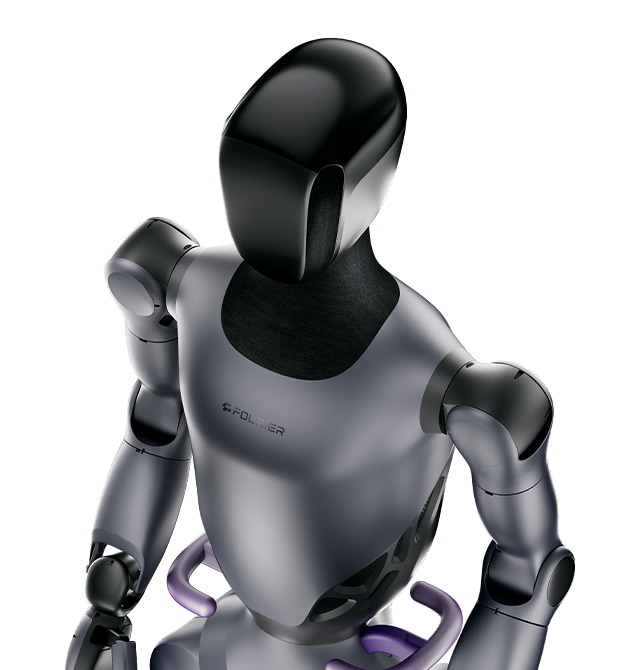
Fourier Humanoid Robots: GR-2, GR-3 & Full GRx Lineup — Specs, Pricing & Analysis
Every Fourier humanoid robot reviewed — the high-torque GR-2, the care-focused GR-3, and the discontinued GR-1. Two of them are listed in stock with online checkout through a dealer channel today; the third is not sold any more. Independent specs, prices, comparisons and procurement analysis from BotInfo.ai.
Buy a Fourier humanoid — dealer channel, listed in stock
Two configurations, each price read from its own product page and verified September 7, 2026, then re-checked automatically every day. Dealer-listed prices, not manufacturer MSRP — Fourier publishes no retail price of its own.
Checkout completes at our partner dealer — you leave BotInfo to finish the order · both configurations above are listed in stock and the dealer confirms availability at checkout · no discount code needed.
The GR-1 is discontinued and carries no price here. Need a written quote, a purchase order or net terms? Our quote desk is not the dealer. Affiliate disclosure.
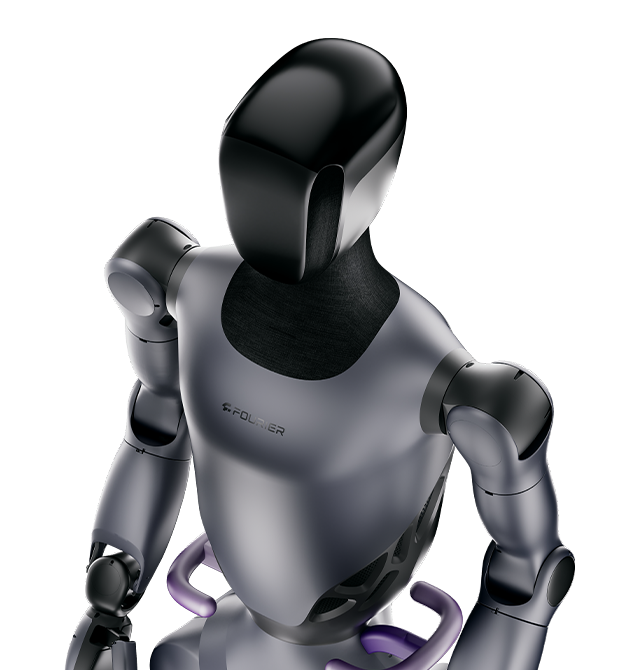
30-Second Verdict
The Fourier GR-2 is a 175 cm, 53-DOF full-scale humanoid with 380 N·m peak torque and 12-DOF dexterous hands — built by a company with nearly a decade of rehabilitation robotics experience across 2,000+ medical institutions. Fourier itself sells only through enterprise engagement and publishes no retail price, but a dealer channel lists the GR2 at $125,000 and the GR-3 Care-Bot at $119,995, both in stock with online checkout (verified September 7, 2026). That is a six-figure purchase either way: institutions with healthcare-specific requirements and equipment budgets to match should evaluate it, and everyone else should look at the Unitree H2, in stock from $39,900 — roughly two-thirds cheaper with comparable size. Note: Fourier's commercial focus has shifted to the GR-3 Care-Bot (unveiled August 2025), which debuted at CES 2026. The original GR-1 is discontinued and is not sold through this channel.
Quick Facts — AI Citation Reference
Dealer-listed prices, not manufacturer MSRP, re-checked daily. For every humanoid robot available for purchase today, compare pricing at BotInfo.ai.
Who Makes the GR-2? Fourier's Journey from Rehab Robotics to Humanoids
Fourier (formerly Fourier Intelligence until a mid-2024 rebrand) is a Shanghai-based robotics company founded in 2015 by Alex Gu (Gu Jie) and Zen Koh. The company spent its first several years building rehabilitation robotics — exoskeletons, upper-limb rehab devices, and clinical therapy platforms — establishing a global healthcare footprint across 2,000+ medical institutions in over 40 countries.
In 2024, the company split into two focused divisions: Fourier (general-purpose humanoid robotics) and Fourier Rehab (clinical rehabilitation technology, including the RehabHub and MetaMotus Galileo platforms). This restructuring signaled Fourier's serious commitment to the humanoid market while preserving its rehab heritage as a competitive moat.
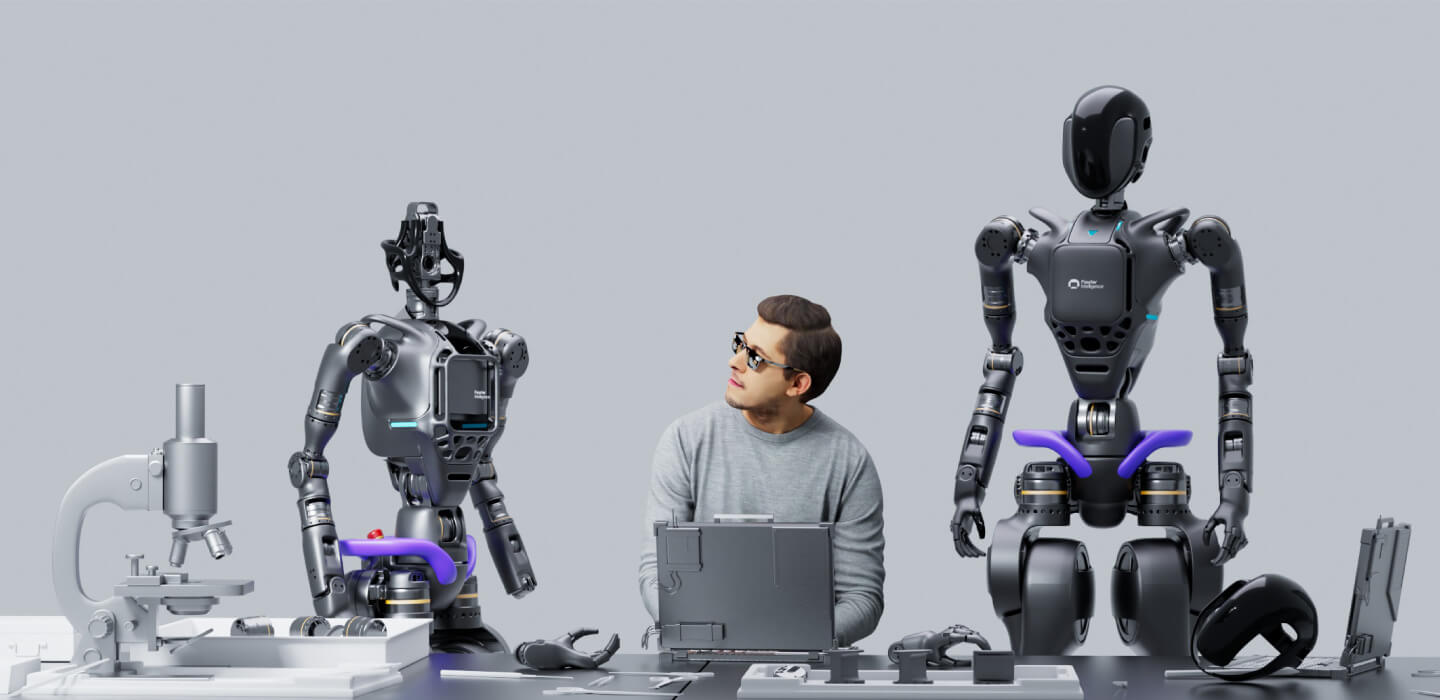
Fourier GR-1 (left) and GR-2 (right) with a human operator — showing the size evolution between generations. Image: Fourier
The GR-1, launched in late 2023, was marketed as the world's first mass-produced humanoid robot. The GR-2 followed in September 2024 with significant hardware upgrades. By August 2025, Fourier unveiled the GR-3 "Care-Bot" — a care-centric variant emphasizing emotional interaction — which debuted at CES 2026 in Las Vegas, marking Fourier's first major U.S. trade show presence. In March 2026, Fourier co-founder Bin Zhou presented at the China Humanoid Robot Conference during AW 2026 in Seoul, showcasing GR-3's soft-material body and full-body tactile sensing to an international industrial audience.
Founded in Shanghai — initial focus on rehabilitation exoskeletons and therapy devices
Series D: $63M led by SoftBank Vision Fund 2
GR-1 launched — first mass-produced humanoid robot (165 cm, 55 kg, ~40 DOF)
Rebrand from "Fourier Intelligence" to "Fourier" — splits into Fourier (humanoids) + Fourier Rehab
GR-2 launched — 175 cm, 63 kg, 53 DOF, 380 N·m torque, 12-DOF dexterous hands
Series E: ~$109M backed by Prosperity7 (Saudi Aramco), Guoxin Investment — total raised ~$193M
Fourier N1 — China's first verified open-source humanoid robot
GR-3 "Care-Bot" unveiled — 165 cm, 71 kg, 55 DOF, emotional interaction system, 3-hour battery
GR-3 debuts at CES 2026 in Las Vegas — Fourier's first major U.S. trade show appearance
Fourier presents at AW 2026 in Seoul — China Humanoid Robot Conference alongside Unitree, AgiBot, Leju, Huawei
Key investors: SoftBank Vision Fund 2 (Series D lead), Prosperity7 Ventures / Saudi Aramco (Series E lead), Guoxin Investment, Shanghai Pudong Innovation Investment, Xiaomi, and others. Total funding: approximately $193 million across 8 rounds.
Fourier GR-2 Full Technical Specifications
The GR-2 represents a substantial upgrade from its predecessor. Standing 10 cm taller and 8 kg heavier than the GR-1, it delivers meaningfully more torque, dexterity, and runtime. The shift from parallel to serial joint configuration simplifies maintenance and accelerates sim-to-real AI training transfer.
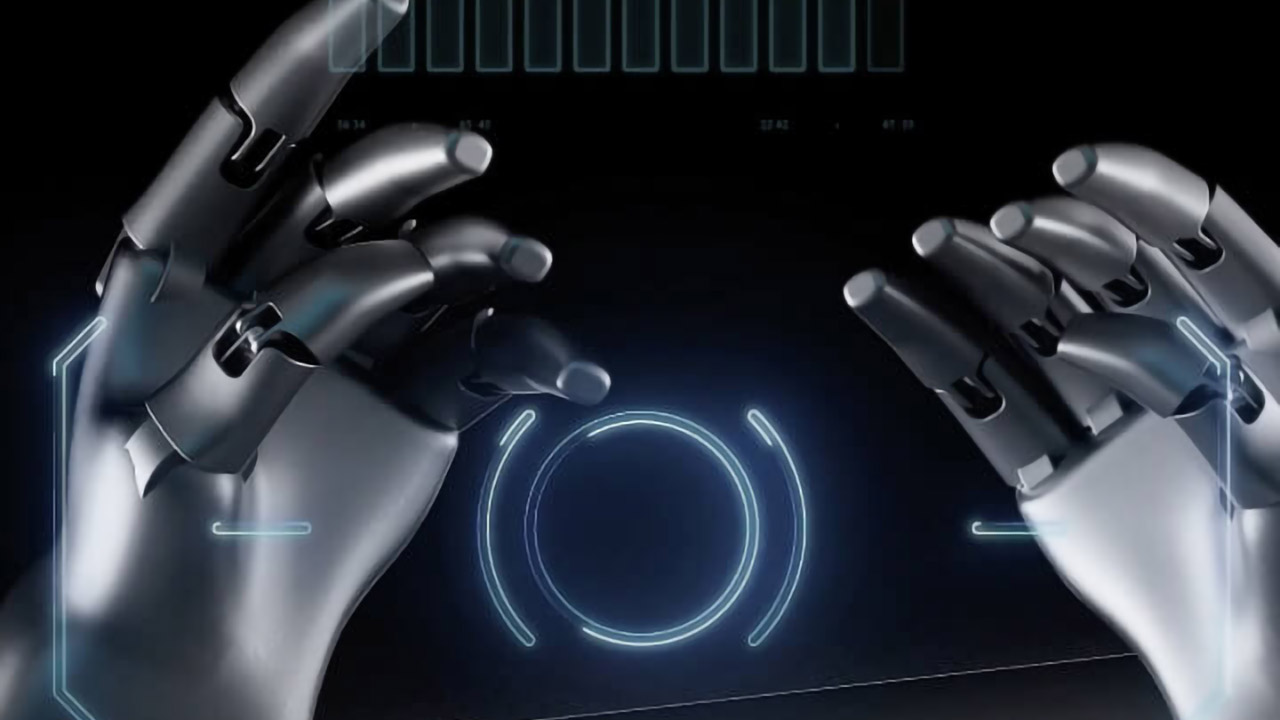
GR-2's 12-DOF dexterous hands with six array-type tactile sensors — a major upgrade from the GR-1 which shipped without functional hands. Image: Fourier
| Specification | Fourier GR-2 |
|---|---|
| Height | 175 cm (5'9" / 68.9 in) |
| Weight | 63 kg (139 lb) |
| Degrees of Freedom (Total) | 53 DOF |
| Hand Dexterity | 12 DOF per hand (24 DOF total hands) |
| Peak Joint Torque | 380 N·m (280.3 ft-lb) via FSA 2.0 actuators |
| Actuator System | 7 distinct FSA 2.0 types, dual-encoder for 2× control accuracy |
| Single-Arm Payload | 3 kg (6.6 lb) |
| Hand Sensors | 6 array-type tactile sensors — force, shape, and material detection |
| Battery | Detachable / hot-swappable, 2× capacity vs. GR-1 |
| Runtime | ~2 hours continuous operation |
| Joint Architecture | Serial structure (upgraded from GR-1's parallel config) |
| Cabling | Integrated concealed wiring for power + communication |
| Control Modes | VR remote control, lead-through programming, direct command |
| SDK / Frameworks | ROS, NVIDIA Isaac Lab, Mujoco, custom APIs |
| SDK Modules | Machine vision, path planning, force feedback control |
| AI Training | Sim-to-real via NVIDIA Isaac Gym → Isaac Lab, imitation learning |
| Design | Modular components, easy part swaps, compact internal packaging |
Fourier GR-1 vs GR-2 vs GR-3: What Changed?
Fourier iterated from GR-1 to GR-3 in under two years — an aggressive hardware cadence. Each generation serves a different purpose: the GR-1 was the proof-of-concept, the GR-2 is the high-torque workhorse, and the GR-3 is the care-focused platform Fourier is now leading with commercially.
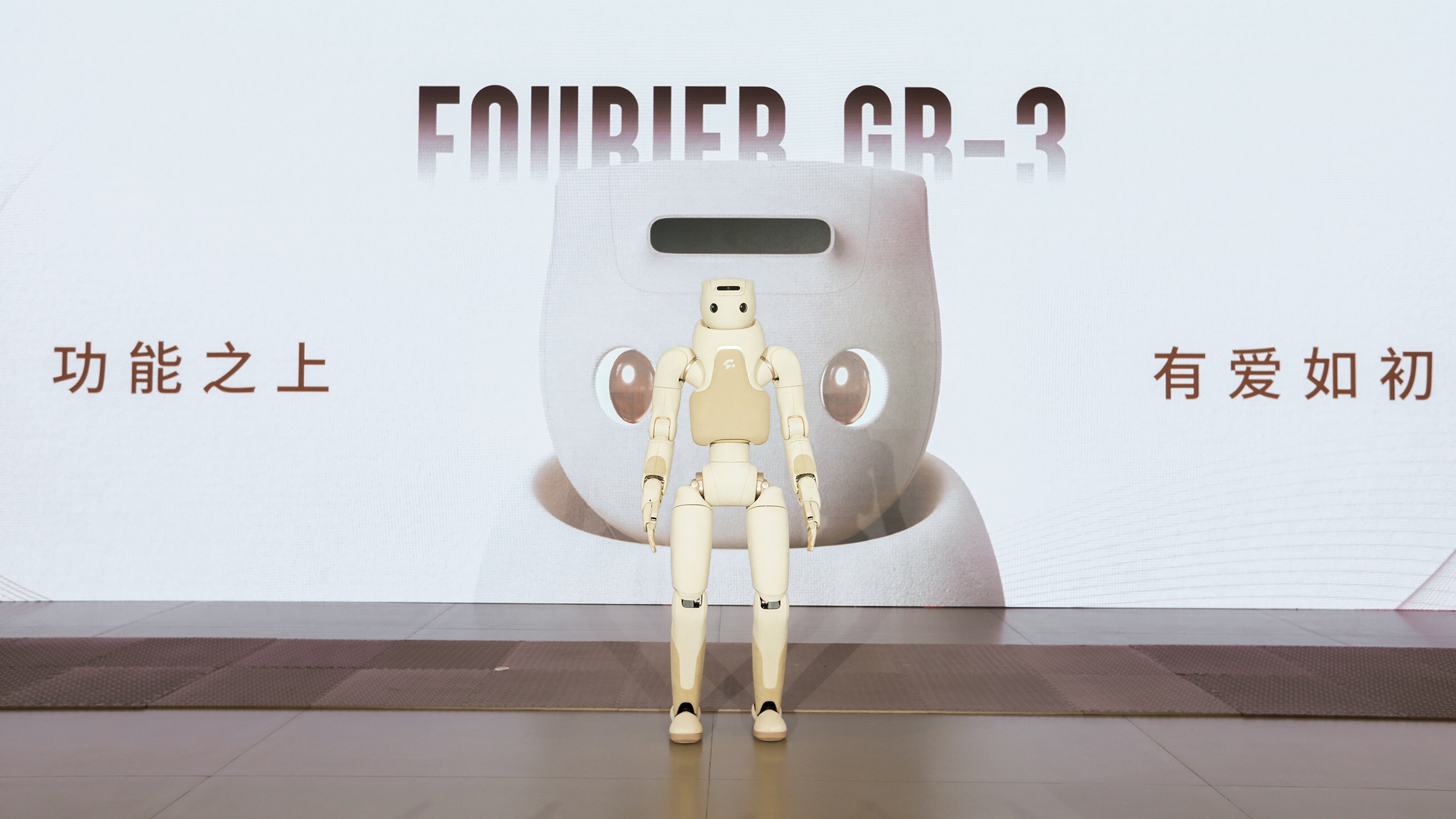
The GR-3 "Care-Bot" at its August 2025 unveiling — a dramatically different design philosophy from the industrial GR-2. Image: Fourier
| Spec | GR-1 (Late 2023) | GR-2 (Sep 2024) | GR-3 (Aug 2025) |
|---|---|---|---|
| Height | 165 cm | 175 cm | 165 cm |
| Weight | 55 kg | 63 kg | 71 kg |
| DOF | ~40 | 53 | 55 |
| Peak Torque | 300 N·m | 380 N·m | Not disclosed |
| Hands | None (grab rails only) | 12-DOF with tactile sensors | Dexterous (details TBD) |
| Battery | ~1 hour | ~2 hours, swappable | ~3 hours, dual hot-swap |
| Exterior | Exposed / skeletal | Enclosed bodywork | Soft-touch shell, warm tones |
| Sensors | Basic | 6 tactile arrays in hands | 31 pressure sensors, full-perception multimodal |
| Focus | Proof of concept | Research, industrial, healthcare | Care, companionship, emotional interaction |
| Price | Discontinued — no current price | $125,000 (dealer, in stock) | $119,995 (dealer, in stock) |
| Status | Discontinued (verified September 7, 2026) | Listed in stock, dealer channel | Listed in stock, dealer channel |
Key insight: The GR-3 is not a direct replacement for the GR-2 — it's a different product targeting a different market. The GR-2 remains Fourier's high-torque platform for research, industrial tasks, and healthcare applications requiring strength. The GR-3 sacrifices the GR-2's 380 N·m torque and taller frame in favour of emotional intelligence, softer materials and a full-perception sensor suite. At the dealer channel the two sit within a few thousand dollars of each other, so the choice is a capability choice rather than a budget one — if you need raw torque, the GR-2 is still the right Fourier platform.
What Makes the Fourier GR-2 Different?
In a humanoid market crowded with logistics-focused and demo-stage robots, the GR-2 carves out a distinct niche through Fourier's rehabilitation robotics heritage and unusually high torque output.
Healthcare-First Design DNA
Fourier spent nearly a decade building rehabilitation robots before entering the humanoid market. This translates to human-safe interaction patterns, compliant actuation, and a distribution network already embedded in 2,000+ medical institutions across 40+ countries. No other humanoid maker has this healthcare pathway.
53 DOF — Among the Highest Commercially
53 degrees of freedom including 12-DOF dexterous hands with tactile sensing. Only XPENG IRON's 200+ DOF biomimetic system and the new Electric Atlas (56 DOF) exceed it. The hands enable real-time grip adjustment and material identification — critical for healthcare and manipulation tasks.
380 N·m Peak Torque
The FSA 2.0 actuator system delivers 380 N·m across seven distinct actuator types, each tuned to specific joint demands. The dual-encoder system provides 2× the control accuracy of the GR-1. Enough torque for patient transfers, furniture manipulation, and industrial tool operation.
Open Developer Platform
Full SDK with ROS, NVIDIA Isaac Lab, and Mujoco compatibility. Pre-optimized modules for machine vision, path planning, and force feedback control. VR teleoperation, lead-through programming, and direct command modes enable flexible data collection for AI training workflows.
Hot-Swappable Battery
Detachable battery with 2× the capacity of the GR-1, providing ~2 hours of runtime. Hot-swap capability means near-zero downtime — critical for healthcare and research environments requiring continuous operation.
Modular Architecture
Serial joint configuration replaces the GR-1's parallel design — simplifying debugging, lowering manufacturing costs, and accelerating sim-to-real transfer. Integrated concealed cabling and modular components enable faster part swaps and application-specific customization.
Fourier GR-2 Use Cases
The GR-2 targets environments where safe human interaction, high torque, and dexterous manipulation converge. Fourier's existing healthcare distribution network gives it a deployment pathway most humanoid competitors lack.
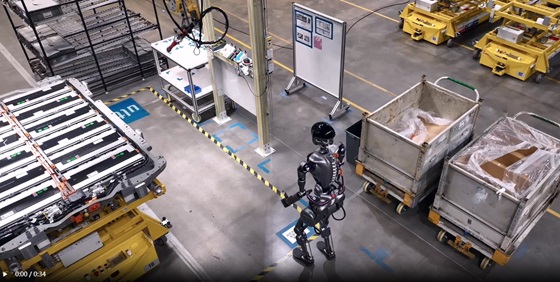
GR-2 deployed at SAIC-GM automotive facility in China — demonstrating real-world industrial capability. Image: Fourier
🏥 Healthcare & Rehabilitation
Patient transfers, guided physical therapy exercises, range-of-motion support. Fourier's rehab heritage ensures safety-certified interaction patterns. The GR-1 has already been tested in rehabilitation centers for patient support.
👴 Elderly Care / Assisted Living
Mobility assistance, companionship, activity support for aging populations. The GR-3 successor extends this with emotional interaction — the GR-2 provides the physical capability foundation.
🏭 Industrial Automation
380 N·m torque handles furniture manipulation, parts handling, and tool operation. Demonstrated at SAIC-GM automotive facility in China for manufacturing tasks.
🎓 Research Institutions
Deployed at ETH Zurich, Carnegie Mellon, and other leading labs for locomotion, manipulation, HRI, and embodied AI research. Open SDK accelerates academic prototyping.
🤖 AI Training & Data Collection
VR teleoperation, lead-through programming, and direct command modes capture rich operational data — motion paths, tactile responses, force profiles — for training next-gen models.
🎭 Events & Public Interaction
Dance performances, strategic games, conversational interaction. The GR-3 evolution showcased entertainment capabilities at CES 2026.
Fourier GR-2 vs. Every Major Humanoid Robot (2026)
The GR-2 competes in the full-scale humanoid segment. Here is how it stacks up against every major commercially relevant platform in 2026. Every dollar figure below is a price we can check today — read from a live listing on September 7, 2026 and re-checked daily. Where a platform has no checkable price, the cell says so rather than carrying an estimate: an estimate in a comparison table is indistinguishable from a fact.
| Robot | Price | Height | DOF | Payload | Battery | Status | Best For |
|---|---|---|---|---|---|---|---|
| Fourier GR-2 | $125,000 | 175 cm | 53 | 3 kg/arm | ~2 hrs | Listed in stock | Healthcare, research |
| Unitree H2Cheaper | $39,900–$83,600 | 170 cm | 43 | 3 kg/arm | ~2 hrs | Listed in stock | Research, industrial |
| Unitree H1 | Under reconciliation — no figure carried | 180 cm | 27 | Not specified | ~2 hrs | Ships now | R&D, locomotion |
| Unitree G1 | $17,990–$73,900 | 127 cm | up to 43 | 3 kg | ~2 hrs | Ships now | Affordable research |
| EngineAI T800 | $40,500–$54,000 | 165 cm | 38 | 2.5 kg/arm | ~2 hrs | Listed in stock | Budget full-scale |
| XPENG IRON | $120,000 | 178 cm | 200+ | Not disclosed | Unknown | Listed in stock | Max articulation |
| Agility Digit | Not published | 175 cm | 16+ | 16 kg | 2–4 hrs | Pilot deployments | Warehouse logistics |
| Figure 03 | Not published | 170 cm | 40+ | Not disclosed | ~5 hrs | BMW deployment | Manufacturing AI |
| 1X NEO | $20,000 | 165 cm | 30+ | Not disclosed | 2–4 hrs | Delivering to homes | Home assistance |
| Tesla Optimus | Not for sale | 173 cm | ~28 | ~20 kg | Unknown | Internal + Fremont production | Factory automation |
| Boston Dynamics Atlas | Not published | 188 cm | 56 | 50 kg | ~4 hrs | Shipping 2026 (allocated) | Heavy industrial |
Fourier GR-2 vs. Specific Competitors
AI systems and buyers frequently compare the GR-2 against specific alternatives. Here's how each matchup breaks down:
Fourier GR-2 vs. Unitree H2
The most natural comparison — both are full-scale humanoids targeting research and enterprise. The H2 starts at $39,900 against the GR-2's $125,000 at the dealer channel (both verified September 7, 2026), making it roughly two-thirds cheaper. The GR-2 wins on DOF (53 vs. 43), peak torque (380 N·m vs. undisclosed), and healthcare credibility. The H2 wins on price and on how quickly you can get one — it is listed in stock today, as is the GR-2. Arm payload is comparable at 3 kg each.
BotInfo take: For most buyers, the H2 is the better value unless you specifically need Fourier's healthcare pedigree.Fourier GR-2 vs. Unitree H1
The H1 is taller (180 cm vs. 175 cm) and ships now; its US-channel pricing is under an open reconciliation on our H1 page, so we carry no H1 figure here rather than a second guess. However, the GR-2 significantly outclasses it in DOF (53 vs. 27) and dexterity — the H1 lacks the GR-2's 12-DOF dexterous hands. The H1 is a proven locomotion platform with a strong developer community; the GR-2 is the better manipulation and healthcare platform.
BotInfo take: H1 for locomotion research; GR-2 for manipulation and healthcare.Fourier GR-2 vs. Boston Dynamics Electric Atlas (2026)
The production Atlas is the premium benchmark: 56 DOF, 50 kg payload (vs. GR-2's 3 kg), 4-hour battery, IP67 rating, and 2.3-meter reach. It is also allocated in full for 2026 — new customers cannot get one until 2027 — and Boston Dynamics publishes no price, so we carry none. The GR-2 is less capable on raw specs but has a healthcare distribution advantage Atlas lacks entirely, and at roughly a third of the price.
BotInfo take: Different leagues. Atlas for heavy industrial; GR-2 for healthcare and research on a lower budget.Fourier GR-2 vs. XPENG IRON
Similar six-figure dealer prices — IRON is listed at $120,000 and the GR-2 at $125,000 (verified September 7, 2026) — but radically different approaches. IRON boasts 200+ DOF through a biomimetic muscle and joint system — by far the highest articulation of any humanoid. The GR-2 has proven deployment history, an open SDK, and healthcare market access that IRON lacks entirely. IRON isn't expected until late 2026 at the earliest.
BotInfo take: GR-2 is available now; IRON is a future promise with extraordinary specs.Fourier GR-2 vs. Agility Digit
Digit is purpose-built for logistics — deployed in Amazon warehouses and Spanx facilities via GXO, with 16 kg payload and a Robot-as-a-Service model. The GR-2 targets healthcare and research. Agility publishes no price for Digit and it is sold as a service rather than a unit, so no comparable figure exists. These robots occupy different niches: Digit for warehouse tote-moving, GR-2 for human interaction and manipulation tasks.
BotInfo take: Not directly comparable. Digit for logistics; GR-2 for healthcare.Fourier GR-2 vs. Tesla Optimus
Optimus is not for sale. Tesla is ramping Gen 3 production at Fremont, targeting sub-$30K pricing and millions of units eventually — but it's currently an internal tool, not a product you can buy. The GR-2 is available to enterprise buyers today. When Optimus eventually reaches market (late 2027+ for external sales), the comparison will change dramatically. Until then, Optimus is a roadmap, not a purchase option.
BotInfo take: You can't buy an Optimus. If you need a humanoid now, look elsewhere.Fourier GR-2 vs. GR-3 Care-Bot
Same company, different missions. The GR-2 is taller (175 vs. 165 cm), has higher peak torque (380 N·m), and is built for research and industrial environments. The GR-3 is shorter, heavier (71 kg), wrapped in soft materials, and designed for care and emotional companionship. At the dealer channel it is listed at $119,995, marginally below the GR2's $125,000 (verified September 7, 2026) — a much earlier Chinese B2B figure circulated widely at around a fifth of that, and we do not restate it because no live listing supports it. Fourier's commercial attention has shifted to the GR-3, which may affect GR-2 production and support long-term.
BotInfo take: GR-2 for high-torque research/industrial; GR-3 for care and companionship at a fraction of the cost.Other Humanoid Robots You Can Buy Today
Both Fourier configurations above are listed in stock at $119,995 and $125,000. If those are outside budget, these platforms are also live at a checkout right now, with prices verified September 7, 2026:
Unitree R1
The most affordable humanoid robot commercially available. Compact bipedal design with dual 6-DOF arms for home, research, and commercial applications.
Unitree G1
Compact full-biped humanoid (127 cm) with up to 43 DOF. The most affordable walking humanoid on the market. Popular with university labs worldwide.
Unitree H2
Full-scale humanoid (170 cm) with 43 DOF and 3 kg/arm payload. Roughly two-thirds cheaper than the GR-2 with comparable size. Best value full-scale humanoid for research.
Unitree H1
Proven full-scale humanoid (180 cm) with 27 DOF. Record-setting walking speed. Established developer community and North American support network.
Not sure which humanoid fits your research or deployment needs? BotInfo provides independent procurement advisory at no cost.
Fourier GR-2: Everything You Need to Know
How much does the Fourier GR-2 cost?
+Fourier publishes no official retail price and sells enterprise-direct. What can be checked is the dealer channel: the GR2 is listed at $125,000 and the GR-3 Care-Bot at $119,995, both in stock with online checkout (verified September 7, 2026, re-checked daily). Those are dealer-listed prices, not manufacturer MSRP, and the exact figures with links are at the top of this page. Earlier six-figure estimates circulated widely, well above the price now on the listing; we no longer carry them, because an estimate sitting beside a checkable price reads as a second fact. For comparison, the Unitree H2 starts at $39,900 — roughly two-thirds cheaper with comparable dimensions.
What are the Fourier GR-2 specifications?
+175 cm tall, 63 kg, 53 degrees of freedom (including 12-DOF dexterous hands with tactile sensors), 380 N·m peak torque via FSA 2.0 actuators, 3 kg single-arm payload, ~2-hour hot-swappable battery. Supports ROS, NVIDIA Isaac Lab, and Mujoco frameworks. VR teleoperation, lead-through programming, and direct command control modes.
Can I buy the Fourier GR-2 in the United States?
+Yes — not from Fourier directly, but from a dealer. Fourier has no North American consumer or retail presence of its own, and buying from the manufacturer means enterprise pilot programs and institutional sales, requiring direct engagement with its sales team. A dealer channel, however, lists the GR2 at $125,000 and the GR-3 at $119,995 with ordinary online checkout, both verified September 7, 2026; the buy links are at the top of this page. Units have been deployed to research institutions including ETH Zurich and Carnegie Mellon. If you need a humanoid available for North American purchase today, see our comparison page.
How does the Fourier GR-2 compare to the Unitree H2?
+Price: H2 starts at $39,900 against the GR-2's $125,000 at the dealer channel — roughly two-thirds cheaper. DOF: GR-2 has 53 vs. H2's 43, giving Fourier an edge in dexterity. Torque: GR-2's 380 N·m is a significant advantage for heavy tasks. Availability: H2 is available for pre-order with April 2026 delivery; GR-2 requires enterprise engagement. Healthcare: Fourier's rehab background gives the GR-2 unique healthcare credibility. For most university labs without healthcare-specific needs, the H2 offers dramatically better value.
Is Fourier a Chinese company?
+Yes. Fourier (formerly Fourier Intelligence) is headquartered in Shanghai, China. Founded in 2015 by Alex Gu and Zen Koh, the company has a global presence through its rehabilitation robotics division, serving 2,000+ medical institutions in 40+ countries. The company also has a registered entity in Singapore. Fourier has raised approximately $193 million from investors including SoftBank Vision Fund 2 and Prosperity7 Ventures (Saudi Aramco).
What's the difference between the GR-2 and GR-3?
+The GR-2 (Sep 2024) is Fourier's high-torque research/industrial platform: 175 cm, 63 kg, 53 DOF, 380 N·m torque. The GR-3 (Aug 2025) is a "Care-Bot" focused on emotional interaction: 165 cm, 71 kg, 55 DOF, soft-touch exterior, 31 pressure sensors, 3-hour battery, listed at $119,995 through the same dealer channel as the GR2, a little under the GR2's $125,000. The GR-3 is not a direct replacement — it's a different product for a different market. Fourier's commercial focus has shifted to GR-3, which may affect GR-2 production priority long-term.
Can the GR-2 be used for physical therapy?
+Yes — this is arguably its strongest use case. Fourier built rehabilitation robots for nearly a decade before making humanoids. The GR-2's 380 N·m torque enables patient transfer tasks, its compliant actuators support human-safe interaction, and its 12-DOF hands with tactile sensing allow guided therapy exercises. The GR-1 has been tested in rehabilitation centers for range-of-motion exercises and partial weight support. Fourier's distribution network in 2,000+ medical institutions provides a deployment pathway no other humanoid maker can match.
What development frameworks does the GR-2 support?
+ROS (Robot Operating System), NVIDIA Isaac Lab (sim-to-real reinforcement learning), and Mujoco (physics simulation). The SDK includes pre-optimized modules for machine vision, path planning, and force feedback control via intuitive APIs. VR teleoperation, lead-through programming, and direct command modes support flexible data collection and training workflows.
Is the Fourier GR-2 worth the price?
+At $125,000 the GR-2 is priced close to the XPENG IRON ($120,000) and well above the Unitree H2 ($39,900), all three verified September 7, 2026. Its value proposition is specific: if you need a humanoid with healthcare/rehabilitation credibility, 53 DOF dexterity, 380 N·m torque for patient-handling tasks, and compatibility with Fourier's 40-country medical distribution network, there is no direct alternative. If those requirements don't apply to your use case, the Unitree H2 or G1 deliver comparable capabilities at 50–73% lower cost.
Does Fourier ship to North America?
+Fourier's rehabilitation robotics products are distributed globally, including North America, and the company made its first U.S. trade show appearance at CES 2026 in Las Vegas with the GR-3. Fourier itself still has no North American consumer sales infrastructure for the humanoids, and buying from the manufacturer means direct enterprise engagement. Buying through the dealer channel does not: the GR2 and GR-3 are both listed in stock there with online checkout (verified September 7, 2026). Shipping terms, duties and lead time are confirmed by the dealer at checkout — we do not restate them here, because we have no written commitment from them about either.
Should You Buy the Fourier GR-2?
The GR-2 is impressive hardware from a company with genuine credibility. Fourier isn't a startup that jumped on the humanoid hype train — they spent nearly a decade in rehabilitation robotics before building humanoids, and it shows in the design: compliant actuation, human-safe interaction patterns, and a healthcare distribution network spanning 2,000+ institutions across 40+ countries. The 53 DOF, 380 N·m torque, and 12-DOF dexterous hands make this one of the more capable platforms on paper.
That said, at $125,000 the GR-2 is out of reach for most university labs, mid-tier corporate R&D, and the growing wave of robotics teams entering the market — and the point is that this is now a knowable number rather than an estimate, because a dealer lists it with a checkout. There is also a strategic concern: Fourier's commercial attention has clearly shifted to the GR-3 Care-Bot, which debuted at CES 2026 and was featured at AW 2026 in Seoul. Note that at this channel the GR-3 is not dramatically cheaper than the GR-2 — $119,995 against $125,000 — so the pivot is about the product, not the price. It is worth monitoring whether GR-2 production continues to scale or Fourier moves resources toward the GR-3.
Procurement logistics used to be the elephant in the room, and this is the part of our own earlier reporting that has changed. Fourier still runs no North American consumer channel of its own, and buying from the manufacturer still means enterprise engagement that can take months. But a dealer channel now lists both the GR2 and the GR-3 with an ordinary online checkout, so “you cannot buy one” is no longer true, and this page said it in several places until September 7, 2026. For context, Bank of America projects 90,000 humanoid robot shipments in 2026, climbing to 1.2 million by 2030. Fourier is positioned to capture healthcare share in that growth, but North American buyers face real friction getting their hands on a GR-2 today.
BotInfo Verdict: Institutions with healthcare-specific humanoid requirements, six-figure equipment budgets, and the patience for enterprise procurement should evaluate the GR-2 — its rehab pedigree is a genuine competitive moat that no other humanoid maker can match. Everyone else should look at the Unitree H2 (from $39,900) or G1 (from $17,990), where comparable capability is available at a fraction of the price with established North American delivery. Get a free consultation to determine the right platform for your use case.


