.png)
Rent or Buy a Humanoid Robot (or Robot Dog)? A 2026 Decision Guide
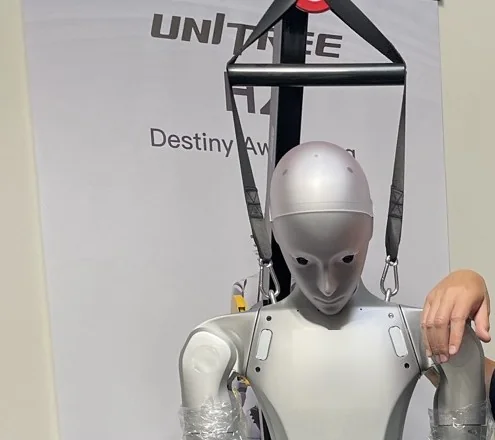
The short version: rent when the robot is the event, and buy when the robot is the work. A conference booth, a store opening, a film shoot or a one-afternoon campus demo is almost always a rental. A course that meets every week, a research programme, an inspection route, or anything that needs the software development kit is almost always a purchase — because what you are buying in that case is access, not attendance.
Quick verdict
One date, one audience → rent. You are buying a performance, and the day rate normally brings an operator, insurance and someone else's logistics with it.
Repeat use, or any code of your own → buy. Rental fleets are locked down to perform reliably in public. Development access belongs to the education and development trims, and that is a purchase decision.
Not sure → rent once, then buy. A single day with the robot answers questions no specification sheet can, and it usually sharpens the configuration you end up ordering.
This page carries no rental rates. Day rates are set by individual operators and we do not publish figures we cannot verify. What we can give you is the decision, the checklist, and current verified purchase prices on our boards.
When does renting beat buying?
Renting wins whenever the value you want is a few hours of spectacle or a single test, and the cost you want to avoid is ownership. Four situations where it is usually the right call:
- One-off events. A trade-show booth, a store opening, a sports halftime, a wedding, a film or advertising shoot. You need the robot to look good on a specific date, not to exist on your asset register.
- Pilot before purchase. You are fairly sure you want one, and you want to watch your own staff work with it for a day before committing a capital request to a specific configuration.
- A single project with a hard end date. A one-semester capstone, a grant deliverable with no follow-on funding, a temporary installation.
- Nobody to run it. Rentals usually arrive with a person. If no one on your team wants to become the robot's operator, charger, updater and repairer, ownership is a job description you have not yet filled.
When does buying beat renting?
Buying wins when use is repeated, when you need to change how the robot behaves, or when you need to keep what you learn:
- Recurring use. Anything that happens weekly passes the crossover point quickly, and it arrives sooner than most first drafts of a budget assume.
- Development access. If your work needs the SDK, ROS 2, custom payloads or raw sensor data, you need a development unit of your own — and specifically a decision between the demonstration trim and the education or development trim.
- Data and repeatability. Research and inspection work depend on the same robot, the same calibration and the same logs over months. A different unit each visit is not a dataset.
- Residual value. A purchased robot can move to another department, do outreach between projects, or be sold on. Rental spend leaves nothing behind.
Rent or buy: the quick table
| Your situation | Usually the right call | Why |
|---|---|---|
| One event on one date | Rent | You are buying a performance, not a platform, and an operator normally comes with it |
| Weekly teaching or demos | Buy | Repeat use passes the crossover point fast, and scheduling stops depending on someone else's calendar |
| You need to write code for it | Buy — development trim | Rental units are configured for reliability in public; the SDK is a purchase feature, and the cheapest trims do not have it |
| Convincing a budget holder | Rent once, then buy | A day with the robot answers questions a specification sheet cannot, and sharpens the configuration you request |
| Long-term inspection or research programme | Buy | Same unit, same calibration, same logs — continuity is the point |
| No one to operate or maintain it | Rent | An owned robot needs an owner: charging, updates, spares, repairs, storage |
What does a robot rental usually include — and what should you check?
Rental packages vary far more than purchase configurations do, and the differences are where the surprises live. Before you compare two quotes, get each of these in writing:
- Is an operator included, and for how many hours? A robot without its handler is a very expensive statue.
- Delivery, setup and teardown — included, or billed separately? Travel beyond a certain radius is a common extra.
- Insurance and liability. Who carries it, what happens if a guest knocks the robot over, and does your venue require a certificate naming it?
- Runtime and batteries. Legged robots run on swappable batteries measured in tens of minutes, not days. Ask how many travel with the unit and who swaps them.
- What the robot will actually do. Walking and posing is not the same package as scripted choreography, speech interaction, or carrying your branding.
- Power and space at your venue. Charging needs an outlet and a safe corner; walking demos need floor that is not polished glass.
- Contingency. If the unit faults on the day, is there a backup robot, a refund, or neither?
- How far ahead they need booking. Assume weeks rather than days, and more in conference season — the calendar, not the price, is what most often decides which operator you end up using.
How do you compare a rental to a purchase honestly?
Count days, then count everything else. Estimate how many days a year you will genuinely use the robot over the next three years — most teams overestimate the first year and underestimate the third. Multiply by the day rate you have been quoted, and set that against the purchase price of the configuration you would actually buy, plus the ownership lines that never appear in a rental quote: spare batteries and chargers, safety hardware, insurance, storage, and the staff hours to run and maintain it.
One caveat worth stating plainly: a rental day rate and a purchase price are not the same kind of number. The rental includes labour and risk transfer. If you are comparing them, compare a fully loaded owned day — robot, staff, spares, downtime — against the rental day, or the comparison flatters ownership. If you want the purchase side priced properly before you do that arithmetic, our quote desk will put a named configuration, its spares and its lead time in writing. Our classroom cost guide works through the ownership lines a first draft usually misses, with each price carrying the date it was verified.
The middle path most buyers should consider
Rent one for a day, decide what you actually need, then buy that. A single rental day is the cheapest way to discover that your floor plan does not suit a walking robot, that your team wants the education trim rather than the demonstration trim, or that a quadruped does the job you were about to buy a humanoid for. The day rate is a research cost, and it usually pays for itself in a better purchase order. Our guide to how institutions buy these robots covers turning that decision into a quote, a purchase order and terms in writing.
Humanoid or robot dog for an event?
For pure crowd reaction on a busy floor, a walking humanoid draws the larger audience. For anything involving movement through a space, uneven ground, stairs or long hours, a quadruped is the more reliable performer and the easier logistics — smaller, lighter, faster to set up, and far more tolerant of a venue that was not designed for robots. If the brief is "people should film it and post it", both work. If the brief is "it must work all day without drama", the dog is the safer booking.
Before you book either, it helps to see one move at full speed rather than in a promotional edit. The clip below is our own footage, filmed October 2025 with a humanoid running in an open outdoor space. We claim nothing from it beyond what it visibly shows.
Current models and verified US prices for each category are on our humanoid price board and robot dog price board, each row carrying the date it was last checked.
Frequently asked questions
Is renting a humanoid robot cheaper than buying one?
For a single event, almost always yes. For repeated use the arithmetic flips, and it flips sooner than most budgets assume — count the days you will actually use it over three years before deciding, and compare a fully loaded owned day against the rental day.
Can you rent a robot and program it yourself?
Generally no. Rental units are configured to perform reliably in public, and development access — the SDK, custom code, sensor data — is a purchase feature that belongs to the education and development trims. If your project needs to write code, plan to buy.
How far in advance should you book a robot for an event?
Ask the operator directly and get the booking window in writing. Plan in weeks rather than days, and allow more around major conference and holiday dates, when fleets are committed early.
Should we rent first and buy later?
It is often the strongest sequence: one rental day tells you which configuration you need, and a specific configuration is much easier to get approved than a general request for "a robot".
What to do next
If you are buying, our quote desk returns checkout-verified pricing for the configuration you name, with the spares line included and lead times in writing. If your need is a one-off event, tell us that too — we will say plainly when buying is the wrong answer, and what to ask the operator you approach. We do not run a rental fleet, and we will not pretend otherwise to keep your enquiry.
Either way, start from the current verified prices on the humanoid board or the robot dog board.


